
The Vinology Blog
Follow along here to learn more about the world of wine!
Last Updated: December 26, 2025
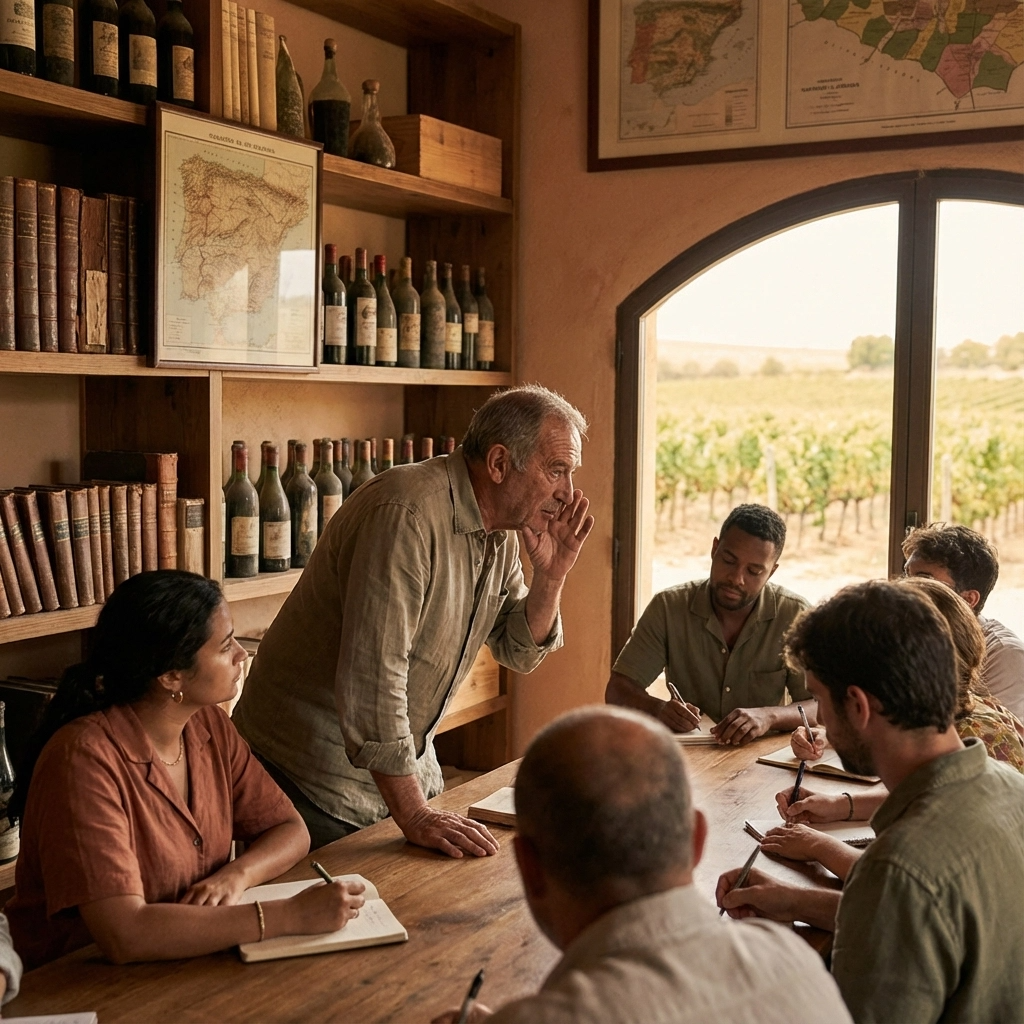
Let me be straight with you – there aren't really "secrets" that wine tourism experts are hiding from you. But there are definitely some insider insights and pro tips that can transform how you approach Spanish wine education, and honestly, most people never learn these because they're stuck in tourist-trap tastings or surface-level courses.
After years in wine education and countless conversations with industry professionals, I've noticed that the most valuable Spanish wine knowledge often gets buried under flashy marketing and generic wine tour experiences. So let's dig into what really matters when you're serious about understanding Spanish wines.
Here's the thing most wine courses won't tell you upfront: Spain has over 70 designated wine regions, each with its own microclimate, grape varieties, and winemaking traditions. Yet 90% of wine tourism focuses on just three areas – Rioja, Ribera del Duero, and maybe Cava country if you're lucky.
This creates a massive blind spot. While tourists are sipping predictable Tempranillos in crowded tasting rooms, there's an entire universe of Spanish wine innovation happening in places like Rías Baixas, Bierzo, and Jumilla that most people never discover.
The wine industry has a vested interest in keeping things simple for tourists. It's easier to sell you on familiar names than to explain why a Mencía from Bierzo might completely change your perspective on Spanish reds, or why the volcanic soils of the Canary Islands are producing some of the most exciting wines in Europe right now.
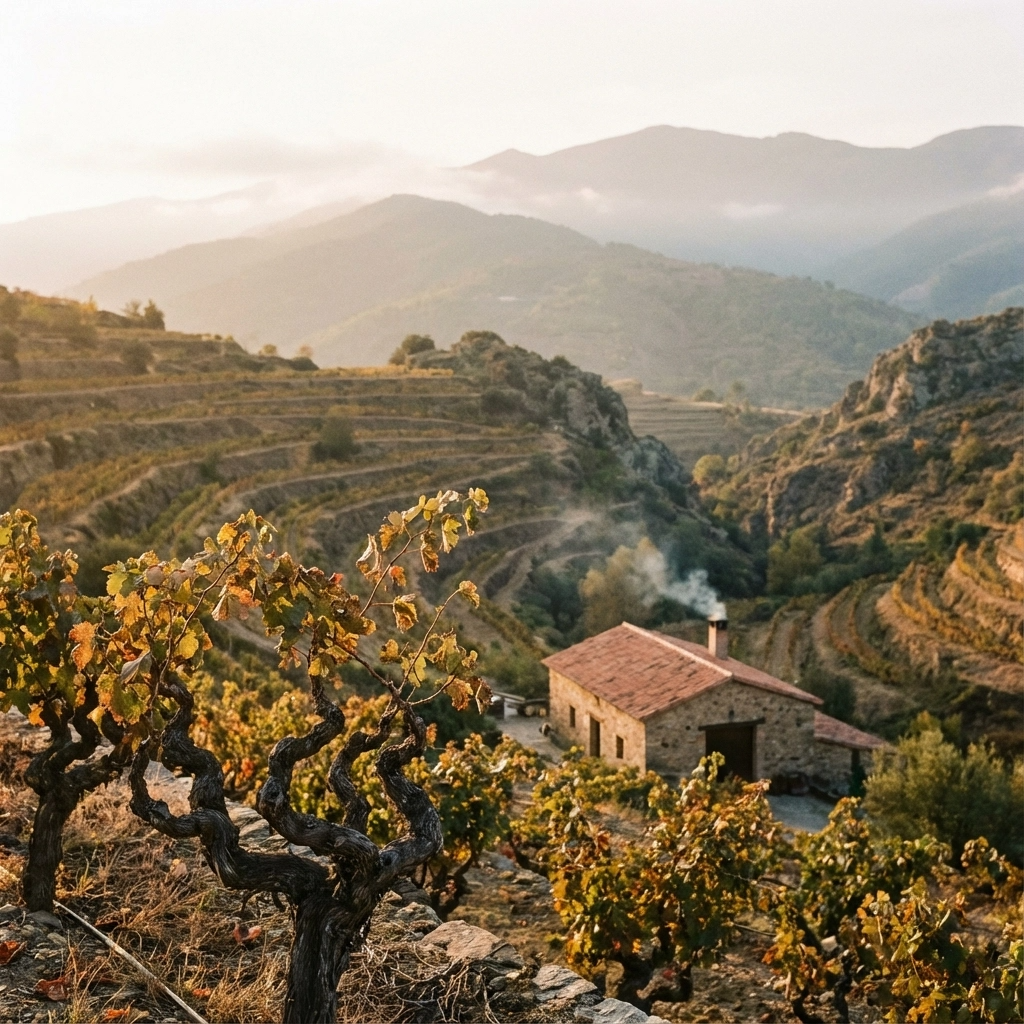
If you've taken wine courses before, you might expect Spanish wine to follow the same patterns as French or Italian wine education. Big mistake. Spain operates on completely different principles that most courses gloss over.
First, Spanish wine classification isn't just about region – it's heavily focused on aging requirements. The Crianza, Reserva, and Gran Reserva system tells you more about a wine's character than the grape variety in many cases. But here's what they don't emphasize: these aging requirements vary by region, so a Rioja Reserva and a Ribera del Duero Reserva are aged differently.
Second, Spanish winemaking embraces both tradition and innovation in ways that would make French winemakers uncomfortable. You'll find 800-year-old vineyards next to state-of-the-art facilities using cutting-edge technology. This creates a complexity that requires a different learning approach entirely.
While everyone's obsessing over Tempranillo (which, don't get me wrong, is fantastic), Spain has over 400 indigenous grape varieties. Most wine courses mention maybe a dozen of them.
Here's the insider knowledge: Spanish winemakers are increasingly focusing on these native varieties because they're perfectly adapted to local conditions and climate change challenges. Varieties like Bobal, Prieto Picudo, and Hondarrabi Zuri aren't just interesting footnotes – they're the future of Spanish wine.
The reason this doesn't get emphasized in tourism-focused education? These grapes are harder to pronounce, don't have centuries of marketing behind them, and require actual expertise to understand and explain. It's much easier to stick to the familiar names.
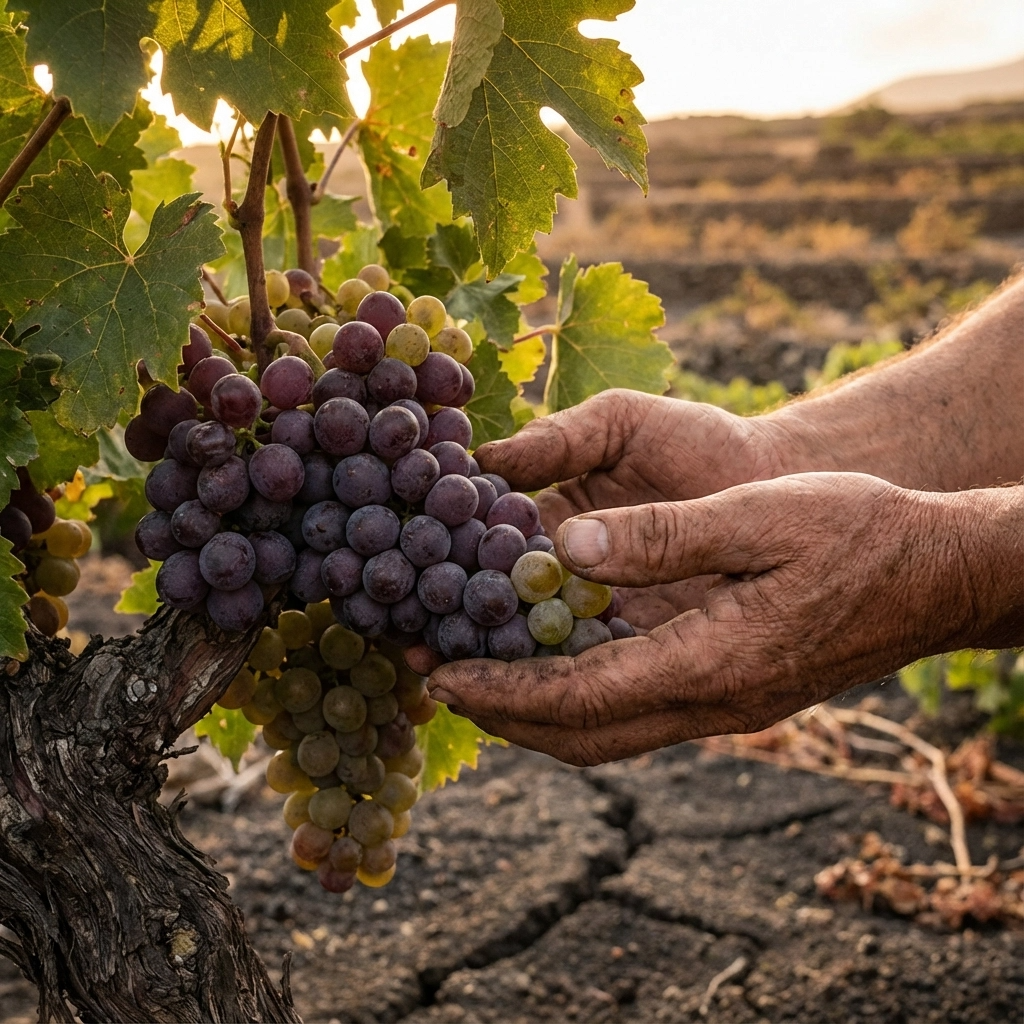
Most Spanish wine courses try to cover everything, which means they cover nothing particularly well. The professionals know that true Spanish wine expertise comes from deep dives into specific regions, not surface-level surveys.
Take Sherry, for instance. It's not just "Spanish fortified wine" – it's one of the most complex wine production systems in the world, with a solera aging process that can span decades. Understanding Sherry properly requires dedicated study, not a 20-minute segment in a general Spanish wine course.
The same goes for regions like Priorat, where extreme terroir creates wines so distinctive they need their own vocabulary. Or Rías Baixas, where the interaction between Atlantic weather patterns and granite soils creates Albariño expressions you won't find anywhere else on earth.
Here's something that will reshape how you think about Spanish wine: Spain isn't just hot and dry. This misconception drives so much bad wine education that it's almost criminal.
Spain has everything from Atlantic coastal climates to high-altitude continental zones to Mediterranean maritime influences. The temperature variations within Spain are more extreme than between some entire countries. A vineyard in Rías Baixas deals with Atlantic storms and granite soils, while a vineyard in Jumilla manages desert conditions and limestone.
Understanding these climate zones is crucial because they explain why Spanish winemakers choose specific techniques, why certain grapes thrive in different areas, and why Spanish wine styles can be so dramatically different from each other.
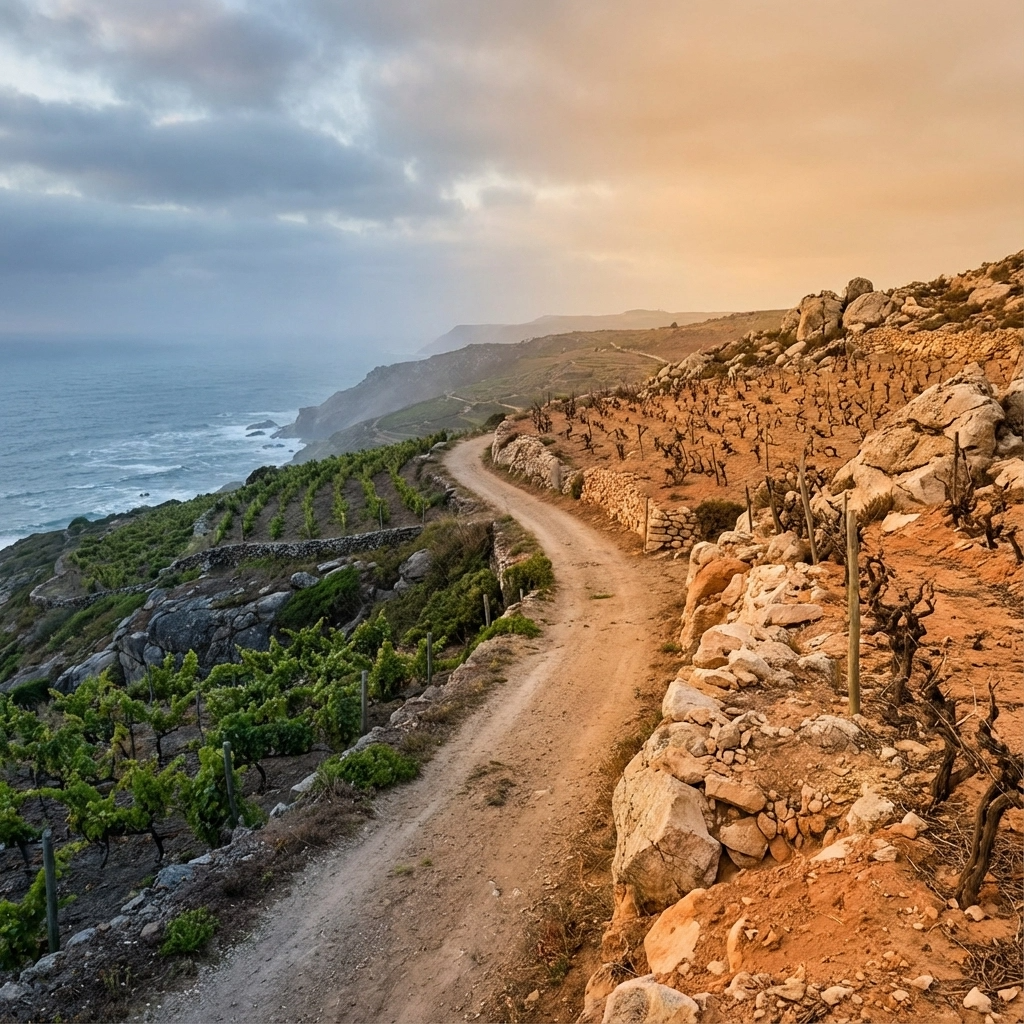
Spanish winemaking has undergone a revolution in the past 30 years that most wine education completely skips. The focus is always on tradition and history, which misses the incredible innovation happening right now.
Spanish winemakers are leaders in sustainable viticulture, experimenting with everything from biodynamic practices to precision fermentation technology. They're pioneering new approaches to dealing with climate change while maintaining the character that makes Spanish wines unique.
But here's the kicker – this innovation isn't happening in the famous regions that wine tours focus on. It's happening in places like Valencia, Extremadura, and Castilla-La Mancha, regions that most wine education treats as afterthoughts.
When wine professionals study Spanish wine seriously, they focus on completely different aspects than consumer-focused courses. They study harvest timing across different climate zones, understand how different oak treatments affect various Spanish grape varieties, and learn to identify the markers of specific Spanish terroir.
They also spend significant time on the business side – understanding how Spanish wine cooperatives work, how the export market influences production decisions, and how Spanish wine fits into global market trends.
Most importantly, professional education emphasizes tasting methodology specific to Spanish wines. Spanish reds require different evaluation techniques than French wines because of different tannin structures and flavor development patterns.
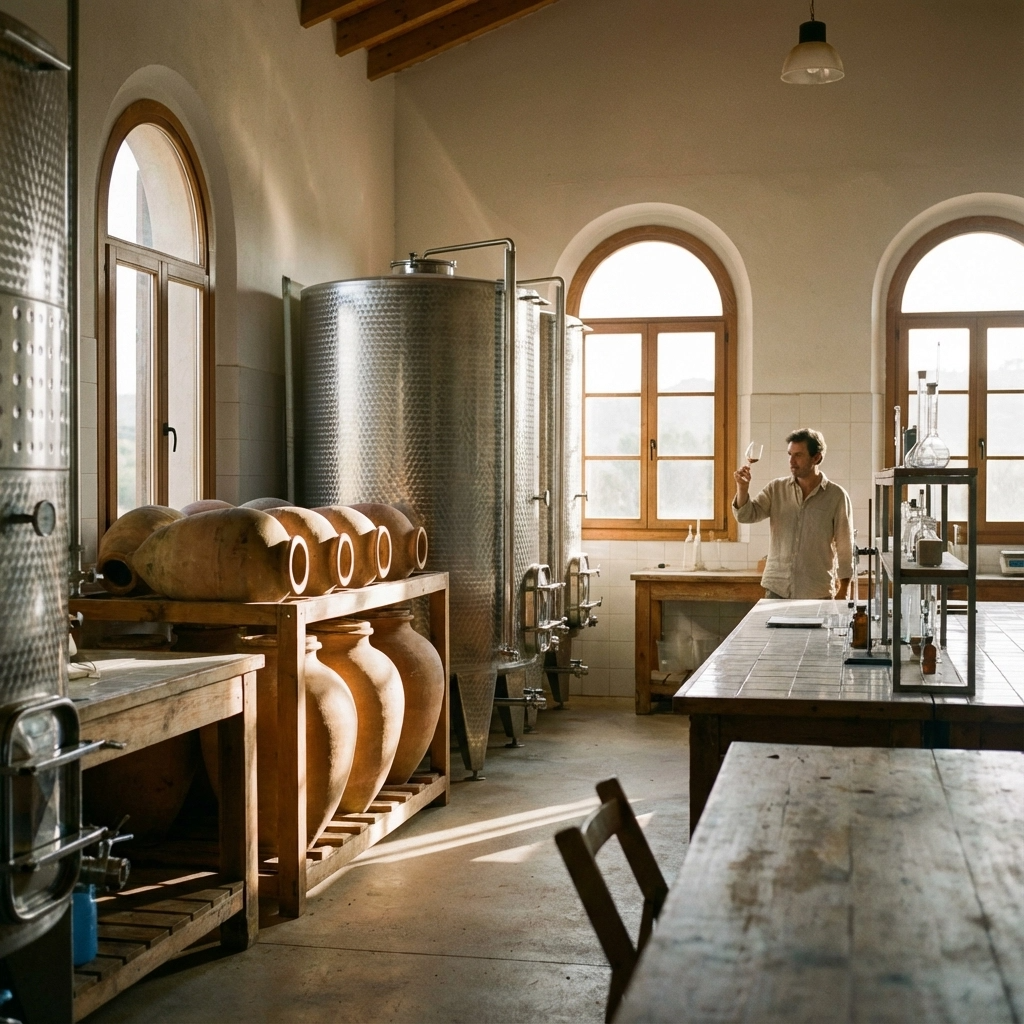
Here's where most Spanish wine courses fail their students: they teach knowledge but not skills. You might learn about different regions and grape varieties, but can you actually identify a Spanish wine blind? Can you recommend Spanish wines for specific food pairings? Can you explain to someone why they should try Spanish wine if they typically drink Italian or French?
These practical skills require hands-on experience with a wide range of Spanish wines, guided by someone who understands both the technical aspects and how to communicate them effectively. It's the difference between knowing about Spanish wine and actually understanding Spanish wine.
Understanding Spanish wine properly opens up incredible value opportunities. Spanish wines consistently offer some of the best quality-to-price ratios in the world, but only if you know what to look for beyond the heavily marketed bottles.
Spain is also at the forefront of addressing climate change in winemaking, so studying Spanish wine now gives you insight into where the entire wine industry is heading. The techniques being developed in Spain's diverse climate zones are being adopted worldwide.
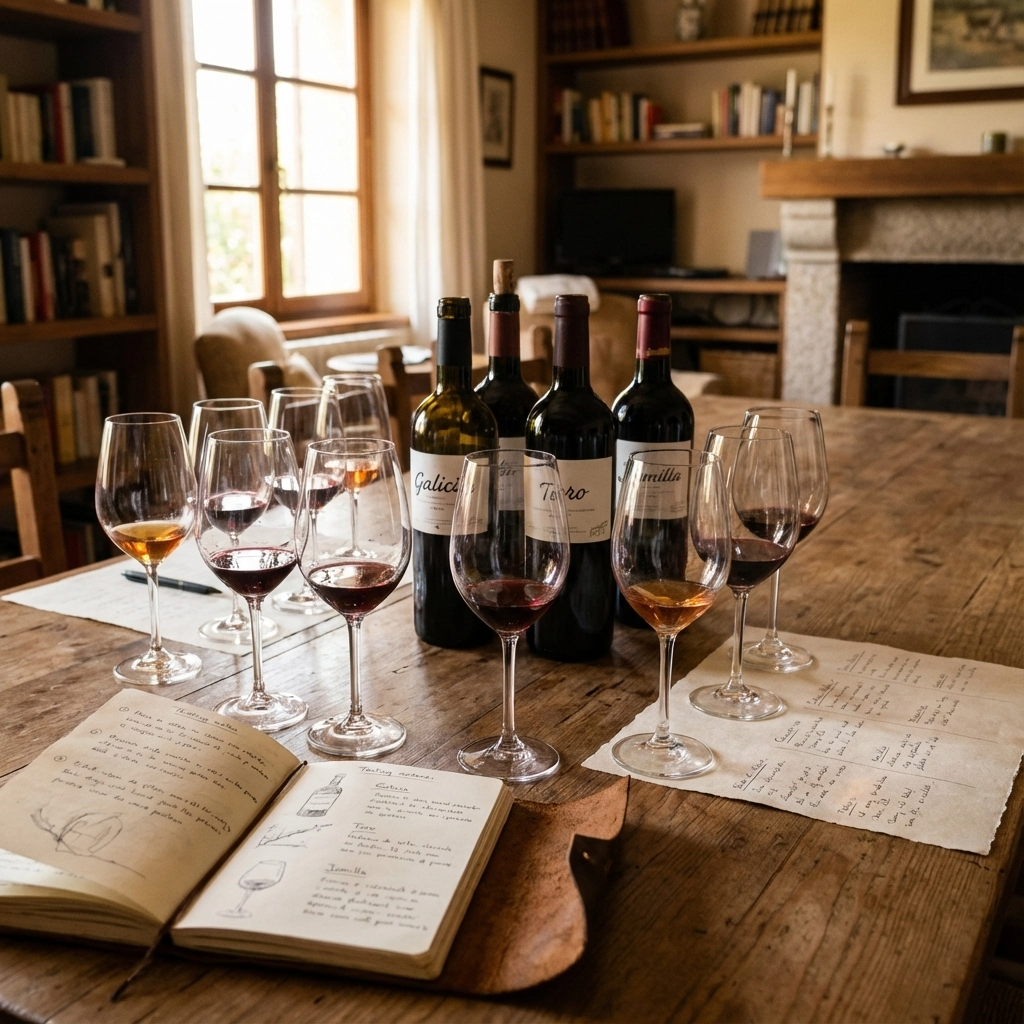
If you're serious about understanding Spanish wine beyond the tourist-level knowledge, you need education that covers the full complexity – the indigenous grapes, the climate diversity, the innovation happening in lesser-known regions, and the practical skills to evaluate and recommend Spanish wines confidently.
The key is finding courses that treat Spanish wine as the complex, diverse wine region it actually is, not as a simplified version designed for casual wine tourists. You want education that prepares you to navigate Spanish wine with confidence, whether you're building a wine collection, working in hospitality, or just want to truly appreciate what Spanish winemakers are accomplishing.
Ready to dive deeper into authentic Spanish wine education? Our comprehensive Spanish wine course covers everything from indigenous varieties to regional climate variations, giving you the real knowledge that most wine tourism misses entirely.
Last Updated: December 31, 2025
Bottom line: Wine tasting is about developing your personal palate, not memorizing fancy terms. Focus on what YOU taste and enjoy.
Overthinking it. Most new wine drinkers get intimidated by complex terminology and "proper" tasting techniques. The truth? You don't need a sommelier certification to enjoy and understand wine. You just need to engage your senses systematically.
Wine tasting follows a simple 5-step sensory method that anyone can master in a single evening. Each step builds on the previous one, creating a complete picture of what's in your glass.
Look at color, clarity, and intensity. Hold your glass against a white background (a napkin or white wall works) and tilt it at a 45-degree angle.
What to observe:
Why this matters: Color tells you about grape variety, age, and potential alcohol content. A deep purple Cabernet Sauvignon signals bold flavors ahead, while a pale Pinot Grigio suggests light, crisp characteristics.
Pro tip: Younger red wines show more purple tones, while older reds develop brick or brown edges. White wines darken with age, moving from pale yellow to golden amber.
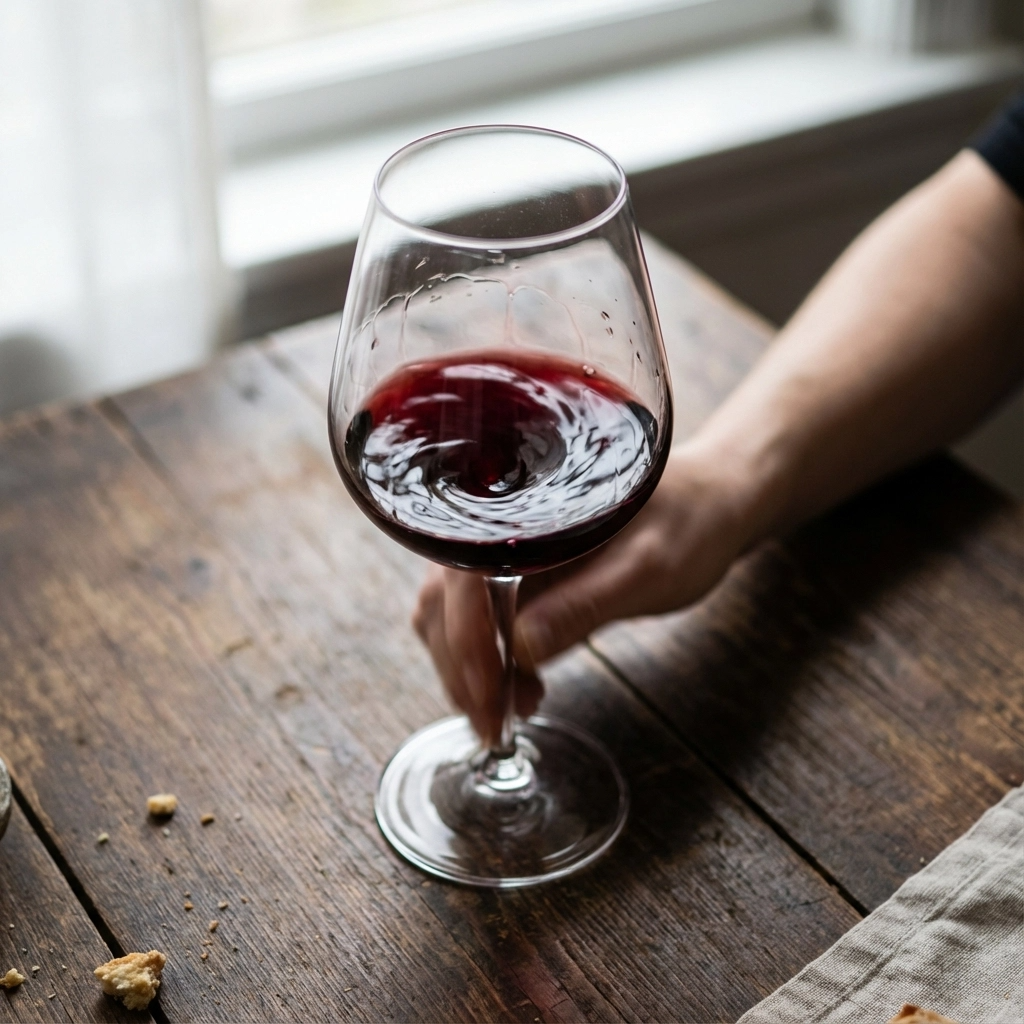
Hold the glass by the stem and make small, gentle circles. Never grab the bowl, your hand heat will warm the wine and affect its aromatics.
Swirling technique:
What swirling accomplishes:
Common mistake: Over-swirling. You're not making a whirlpool, gentle motion is all you need.
Stick your nose deep into the glass and take three deliberate sniffs. Your first impression is usually the most accurate before your nose adapts to the scents.
Primary aromas to detect:
Secondary and tertiary aromas:
Practice tip: Don't worry about "getting it right." Focus on what the wine reminds you of, your grandmother's apple pie, fresh grass, or a spice cabinet. Personal associations help build your aromatic vocabulary.
Take a small sip (about a teaspoon) and let it coat your entire palate. Don't swallow immediately, move the wine around your mouth to engage all taste receptors.
Key elements to evaluate:
Sweetness levels:
Acidity assessment:
Tannin structure (red wines):
Body and alcohol:
Professional technique: Some tasters draw air through pursed lips while the wine is in their mouth. This aerates the wine further and enhances flavor perception, though it's not necessary for beginners.
The finish is everything you taste after swallowing. A wine's finish reveals its quality and complexity more than any other factor.
Finish characteristics:
Length:
Quality indicators:
What to notice:
Fun fact: Premium wines often show their quality in the finish. A $200 Barolo might taste similar to a $30 Nebbiolo on first sip, but the finish will reveal the difference.
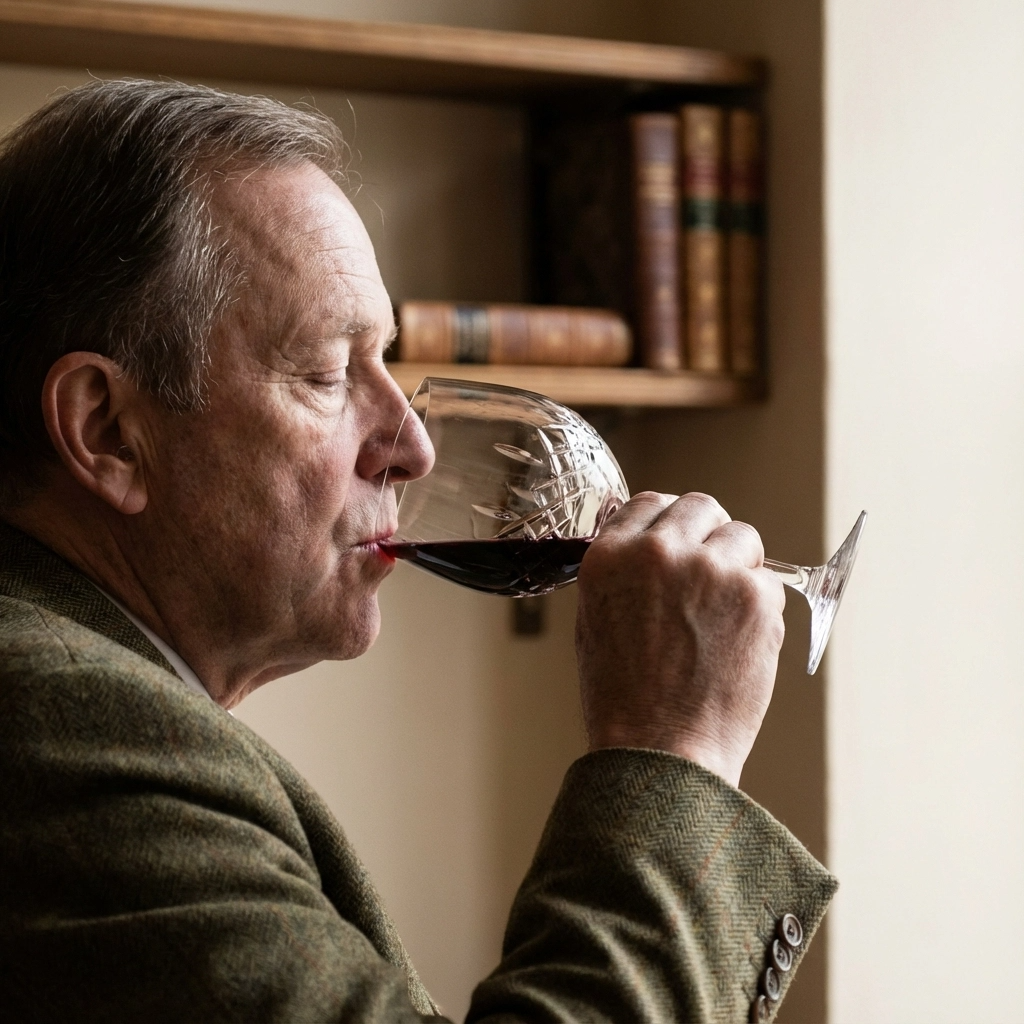
Start with expressive, beginner-friendly varietals that showcase distinct characteristics:
White wines for practice:
Red wines for practice:
Why these work: Each varietal offers distinct sensory experiences that make the 5-step process clear and educational.
You'll notice improvement after practicing with 10-15 different wines. Most people develop confident tasting skills within 2-3 months of regular practice.
Realistic timeline:
Accelerated learning: Take a structured wine course like Vinology Academy's Wine 101 to learn proper techniques from the start. Self-taught tasters often develop bad habits that slow progress.
Q: Do I need expensive wines to practice wine tasting?
A: No. Practice with $12-25 wines that represent classic styles. Expensive wines often show subtle differences that beginners can't detect yet.
Q: Should I take notes while wine tasting?
A: Yes. Write down color, aromas, flavors, and your overall impression. Notes help you remember wines and track your palate development.
Q: How many wines should I taste in one session?
A: Limit yourself to 4-6 wines maximum. Palate fatigue sets in quickly, making accurate assessment difficult.
Q: Is wine tasting just about memorizing descriptors?
A: No. Focus on developing your personal palate preferences rather than using "correct" terminology. Trust what you taste.
Q: Can I improve my wine tasting skills with online courses?
A: Absolutely. Online wine education provides structured learning and expert guidance. Vinology Academy offers comprehensive courses covering everything from Wine 101 basics to advanced regional studies.
Q: What's the difference between cheap and expensive wine tasting?
A: Expensive wines typically show more complexity, longer finishes, and better balance. However, price doesn't always equal quality: focus on learning to identify what you enjoy.
Ready to master wine basics systematically? The 5-step tasting method works with any wine, from grocery store bottles to rare vintages. Practice consistently, trust your palate, and remember: there are no wrong answers in wine tasting, only personal preferences waiting to be discovered.
Last Updated: January 4, 2026
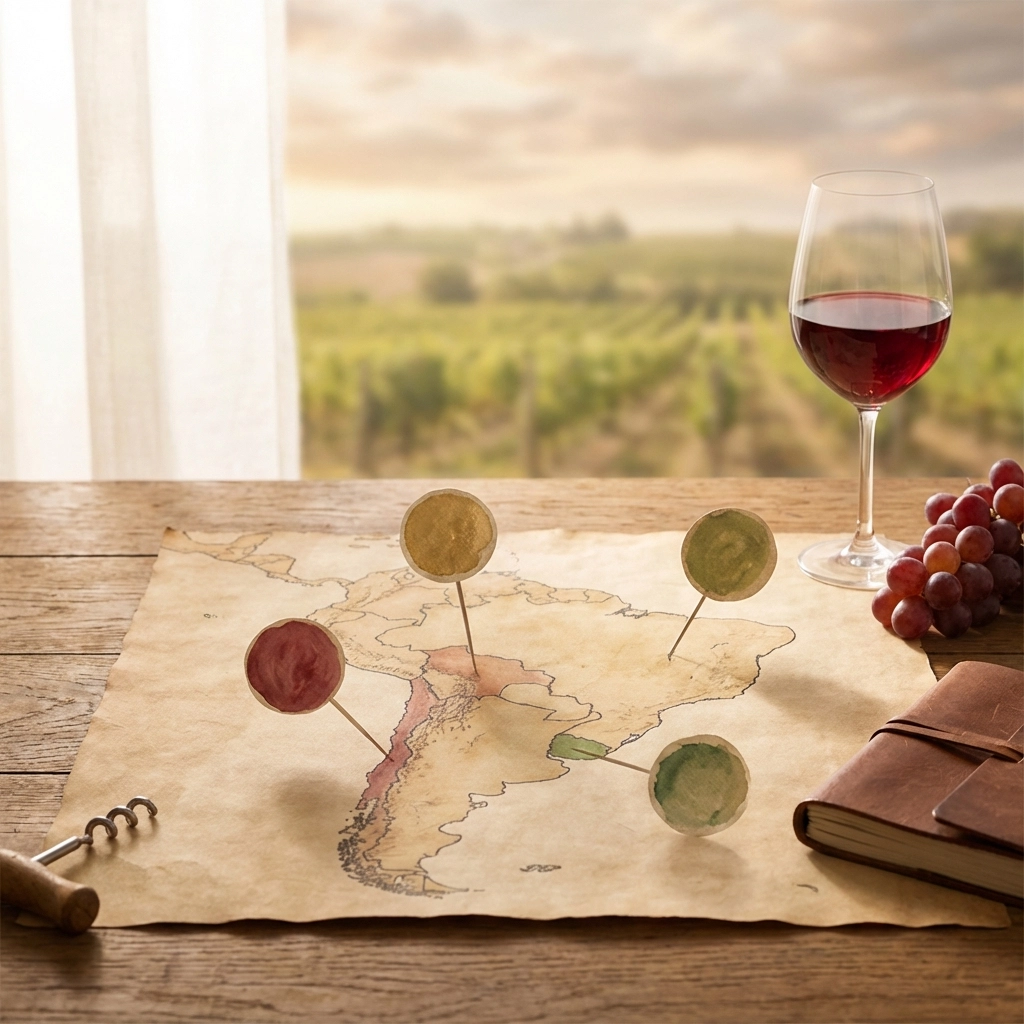
South America wine regions extend far beyond Argentina's famous Malbec and Chile's Cabernet Sauvignon. These 5 hidden gems are reshaping the continental wine map: Patagonia's extreme-south Pinot Noir, La Rioja's unique varietals, Salta's world-record altitude vineyards, Bolivia's rising Tannat stars, and Chile's northern Limarí Valley whites. Each offers distinctive terroir and exceptional value for wine professionals seeking portfolio differentiation.
Patagonia represents some of the world's most southernmost vineyards, spanning Argentina's Neuquén, Río Negro, and Chubut provinces. This burgeoning wine culture produces exceptional Pinot Noir that rivals Burgundy's complexity while offering South American accessibility.
The region's extreme latitude creates unique growing conditions:
Key producers like Bodega del Fin del Mundo and Familia Schroeder are establishing Patagonia as Argentina's premium cool-climate region. The area also attracts wine tourism seeking extraordinary scenery alongside exceptional bottles.
While most wine professionals associate Argentine wine with Mendoza's Malbec, La Rioja offers lesser-known varietals that represent true hidden gems. This unique wine region showcases Argentina's diversity beyond mainstream offerings.
La Rioja's standout characteristics include:
The region's dry climate and dramatic temperature variations create wines with intense concentration and distinctive mineral profiles that set them apart from Argentina's mainstream regions.
Salta holds the distinction as Argentina's high-altitude wine region, home to the world's loftiest vineyards. Some vineyards reach elevations exceeding 3,000 meters (9,800 feet) above sea level, creating extreme growing conditions that produce extraordinary wines.
High-altitude viticulture in Salta delivers:
The result: wines with exceptional color density, complex flavor profiles, and natural preservation qualities. Salta's Malbec and Tannat expressions showcase what extreme terroir can achieve.
Restaurant operators, wine retailers, and hospitality managers: Your staff's expertise directly impacts revenue. Our South America Wine Course (plus 13 other courses) trains unlimited team members for just $995/year per location.
ROI Reality Check: This investment pays for itself by selling approximately 2 additional cases annually. When your servers confidently recommend Patagonian Pinot Noir or Salta high-altitude Malbec, average ticket increases follow.
Bolivia's wine industry is a rising star in South America, with Tarija and Cinti Valley leading the charge. The country's unique high-altitude terroir produces distinctive Tannat wines that compete with Uruguay's famous expressions.
Bolivia's wine advantages include:
Tannat thrives in Bolivia's conditions, producing intensely flavored wines with exceptional structure and aging potential. The thick-skinned grape variety benefits from exceptional sun exposure, creating wines with remarkable concentration.
Located in northern Chile near the Pacific Ocean and Atacama Desert, Limarí Valley offers unique climate conditions for viticulture. This region represents Chile's white wine potential beyond traditional red wine fame.
Limarí's distinctive characteristics:
The valley produces exceptional Sauvignon Blanc and Chardonnay with distinctive mineral profiles and crisp acidity. Cool morning fog from the Pacific creates ideal conditions for premium white wine production in an otherwise arid region.
| Region | Country | Signature Grape | Elevation |
|---|---|---|---|
| Patagonia | Argentina | Pinot Noir | 200-500m |
| La Rioja | Argentina | Torrontés | 1,400-1,800m |
| Salta | Argentina | Malbec/Tannat | 1,700-3,000m+ |
| Tarija/Cinti | Bolivia | Tannat | 1,600-2,800m |
| Limarí Valley | Chile | Sauvignon Blanc | 200-700m |
Bolivia's Tarija region currently offers exceptional value, with premium Tannat wines priced significantly below similar quality from established regions. The unique terroir and emerging recognition create opportunities for early adoption advantages.
High-altitude wines (above 1,500m) show increased color intensity, higher natural acidity, and enhanced flavor concentration due to intense UV exposure and dramatic temperature variations. These conditions create wines with exceptional aging potential.
Patagonian Pinot Noir pairs excellently with lamb and game meats. Salta's high-altitude Malbec complements grilled steaks and aged cheeses. Limarí Valley whites work beautifully with seafood and goat cheese preparations.
Absolutely. Patagonia offers dramatic landscapes alongside wine experiences. Salta provides cultural immersion in indigenous wine traditions. Limarí combines desert scenery with ocean proximity. Bolivia's wine regions offer authentic, uncrowded experiences.
Most regions now have established import channels through specialty distributors. Bolivia requires more specialized sourcing, while Argentine and Chilean regions have developing distribution networks in major markets.
Ready to differentiate your wine program? Our comprehensive Vinology Full Course Bundle covers all major wine regions, including these South American hidden gems.
Enterprise Investment: $995/year per location trains unlimited staff members. Conservative estimate: selling just 2 additional cases annually covers your entire investment while building customer loyalty through expert recommendations.
Hotels, restaurants, wine retailers, and private clubs: Your competition lacks this knowledge. Your educated team becomes your competitive advantage.
These five South American wine regions represent the future of continental viticulture. From Patagonia's extreme southern expressions to Bolivia's high-altitude renaissance, each offers unique opportunities for wine professionals seeking portfolio differentiation. The combination of distinctive terroir, emerging recognition, and accessible pricing creates compelling reasons to explore beyond traditional South American offerings.
Understanding these regions positions you ahead of market trends while offering customers authentic discovery experiences. Whether you're building restaurant wine lists, retail selections, or hospitality programs, these hidden gems provide conversation starters that translate into sales.
Last Updated: January 28, 2026
![[HERO] South America Wine Regions Explained: 10 Hidden Gems You Need to Explore](https://files.cdn.thinkific.com/file_uploads/993692/images/1e7/d7b/de3/1769616031877.png)
Short answer: Extreme altitude, dramatic temperature swings, and diverse microclimates create wines with bold intensity and surprising freshness.
South America's wine story isn't just about one grape or one country. While Mendoza's Malbec put the continent on the global wine map, the real excitement lies in the lesser-known valleys, high-altitude vineyards, and cool-climate pockets that most wine drinkers have never heard of.
From the Andes Mountains to the Pacific coast, South American winemakers are working with terroir that ranges from near-desert conditions to fog-cooled coastal plains. The result? A diversity of styles that can surprise even experienced sommeliers.
Let's explore 10 hidden gems that deserve a spot on your radar , and your wine list.
Argentina is synonymous with Malbec, but limiting yourself to that one grape means missing some of the country's most exciting developments.
The Uco Valley sits within Mendoza but operates as its own world. At elevations reaching over 5,000 feet, this subregion produces Argentina's most refined Malbecs alongside exceptional Cabernet Franc and Chardonnay. The diurnal temperature variation , hot days and cold nights , preserves acidity while building concentration.
Why it matters: Uco Valley wines often show more elegance and minerality than their lower-elevation Mendoza counterparts. Premium restaurants are increasingly listing these as separate from "standard" Mendoza offerings.
Head north to Salta and you'll find Cafayate, home to some of the world's highest commercial vineyards at over 5,500 feet. This is ground zero for Torrontés, Argentina's signature white grape.
What to expect: Aromatic, floral wines with notes of peach and jasmine, balanced by crisp acidity. Perfect for by-the-glass programs looking beyond Sauvignon Blanc.
Patagonia represents Argentina's cool-climate frontier. Strong winds and lower temperatures create ideal conditions for Pinot Noir and crisp white wines that feel more Burgundian than South American.
Pro tip: Patagonian Pinot Noir offers excellent value compared to comparable quality from Oregon or New Zealand.
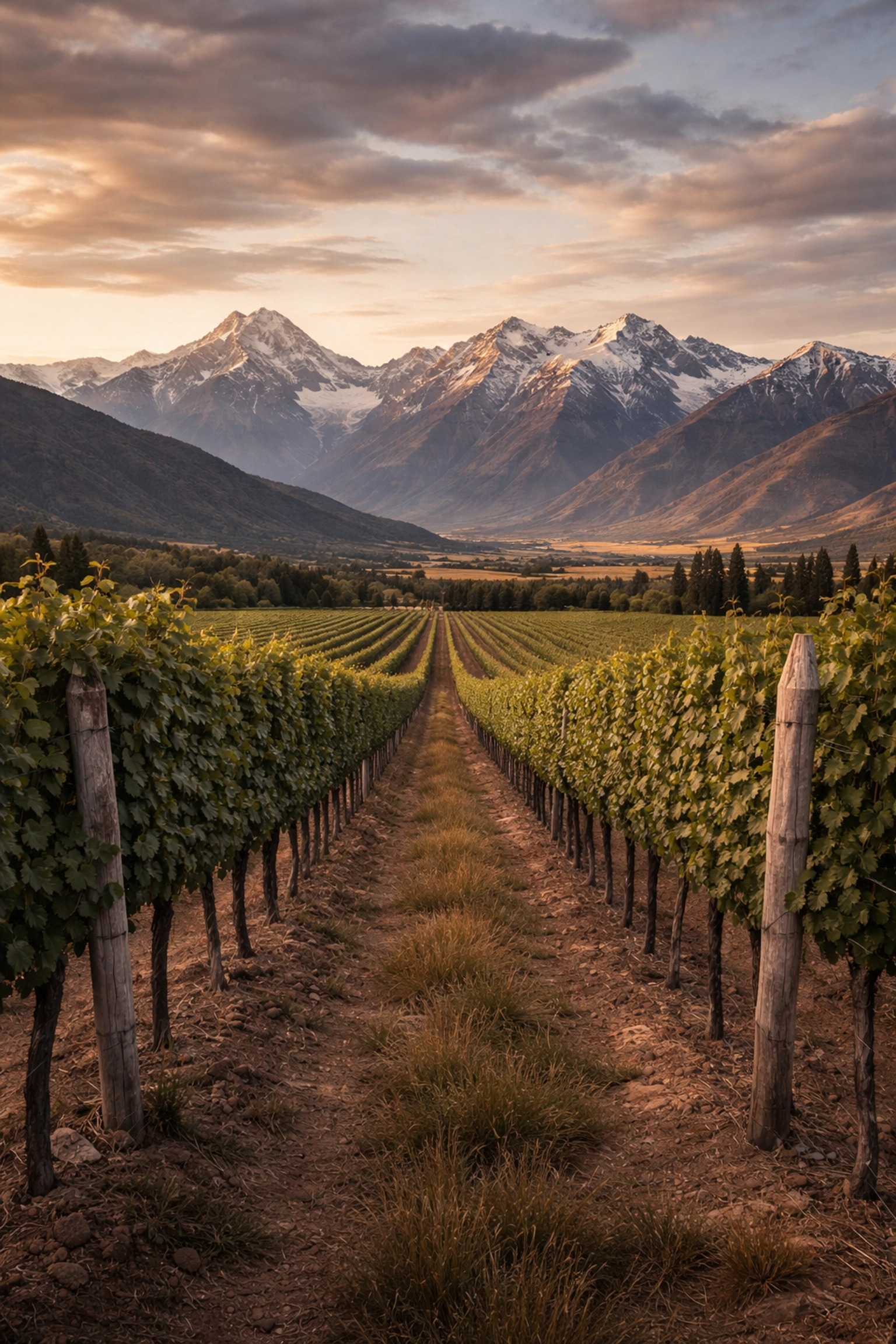
One of Mendoza's newest and most remote subregions, Pedernal sits at around 4,600 feet with rocky, mineral-rich soils. Winemakers here are producing structured, age-worthy reds that challenge preconceptions about Argentine wine.
Chile's wine reputation was built on reliable, affordable Cabernet Sauvignon. But the country's diverse geography , squeezed between the Andes and the Pacific , creates microclimates that support everything from bold reds to delicate whites.
Colchagua earned its reputation with powerful Carmenère and Cabernet Sauvignon, but the valley's true diversity comes from its east-to-west orientation. Vineyards near the Andes produce riper, fuller wines, while those closer to the ocean show more restraint and freshness.
Key insight: Carmenère, once thought to be Merlot, found its true identity in Chile and nowhere expresses itself better than in Colchagua's warm climate.
Just an hour from Santiago, Casablanca proved that Chile could produce world-class cool-climate whites. Morning fog rolls in from the Pacific, keeping temperatures moderate and preserving the natural acidity in Sauvignon Blanc and Chardonnay.
Staff training note: Understanding the difference between Casablanca's coastal whites and Central Valley reds helps your team make better pairing recommendations.
Often overshadowed by its neighbors, Cachapoal delivers excellent Merlot and Malbec at approachable price points. The Mediterranean climate and Andean influence create wines with ripe fruit and soft tannins.
In Chile's northern reaches, Limarí produces mineral-driven Chardonnay and Syrah from limestone-rich soils. The morning camanchaca fog moderates the desert heat, creating conditions unlike anywhere else in South America.
Here's the business case: consumer interest in South American wine is growing, but most hospitality staff can't speak confidently beyond "Malbec from Argentina."
Vinology Academy's South America course covers every major region, grape variety, and winemaking style your team needs to know. And with our Enterprise bundle at $995/year per location, you can train unlimited staff members.
The ROI math is simple: selling just two additional cases of wine per year covers the entire annual fee. Everything after that is profit , plus happier guests who trust your team's recommendations.
👉 Contact us to set up Enterprise training for your team
The continent's wine story doesn't stop at those two heavyweights. Several emerging regions are producing wines that deserve attention.
Uruguay's wine industry centers on Canelones, just north of Montevideo. The star grape is Tannat , a variety that produces tannic, powerful reds in southwest France but shows a softer, more approachable character in Uruguay's humid Atlantic climate.
Why it's trending: Tannat's bold structure and dark fruit profile pairs exceptionally well with grilled meats, making it a natural fit for steakhouse wine programs.
Yes, Bolivia makes wine. Tarija sits at over 5,500 feet in the Andes, producing concentrated Tannat, Cabernet Sauvignon, and Moscatel with intense sun exposure and cool nights.
The opportunity: Bolivian wines remain rare in the U.S. market, but they're conversation starters that demonstrate a sophisticated, adventurous wine program.
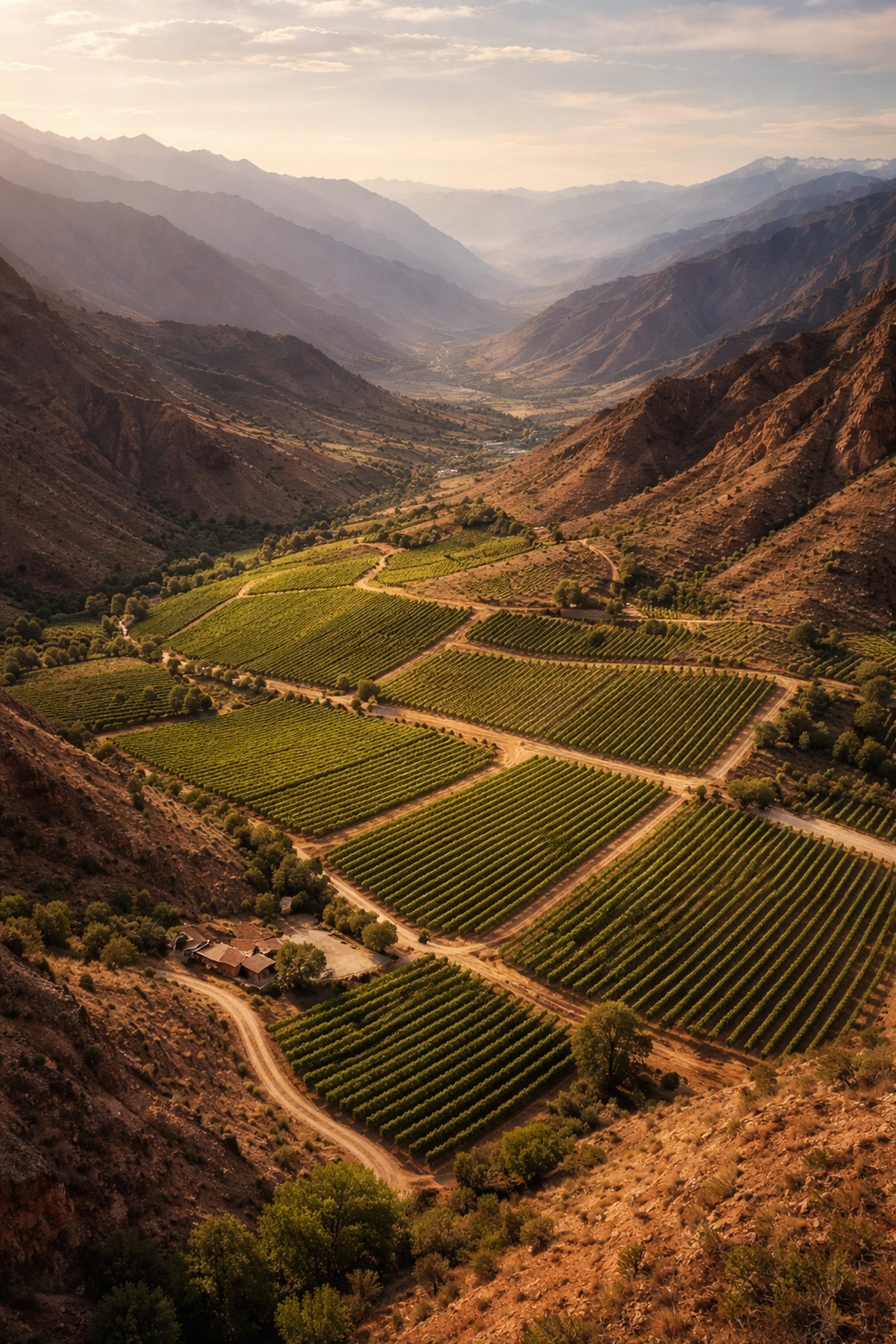
Mendoza, Argentina is the most famous, producing approximately 70% of Argentina's wine and serving as the global benchmark for high-quality Malbec.
Carmenère is Chile's signature red grape, though Cabernet Sauvignon remains its most widely planted variety. Chile rescued Carmenère from near-extinction after it was devastated by phylloxera in Bordeaux.
Absolutely. South American wines range from excellent everyday values to world-class bottlings that compete with top European and American producers. High-altitude vineyards and diverse terroirs create wines with both concentration and freshness.
Argentina's Torrontés is the continent's most distinctive white, while Chile excels with Sauvignon Blanc and Chardonnay from cool-climate regions like Casablanca and Limarí.
No : Malbec originated in France (where it's called Côt in some regions) and is still grown in Cahors. However, Argentina has become synonymous with the grape and produces the vast majority of the world's Malbec.
Understanding these regions isn't just about wine knowledge - it's about giving your team the confidence to guide guests toward bottles they'll love (and remember).
Vinology Academy's South America course, developed with industry experts like Robin Kelly O'Connor, covers everything from Malbec's rise in Mendoza to emerging regions like Patagonia and Bolivia.
For restaurants, wine retailers, hotels, and private clubs: Our Enterprise bundle costs $995/year per location and includes unlimited staff training across our entire course library: South America, France, Italy, Wine 101, and more.
The ROI: Two additional cases sold per year covers the entire fee. After that, it's pure margin - plus a team that sells with confidence.
Last Updated: February 10, 2026
![[HERO] Bordeaux Wine Regions Guide: Everything You Need to Know About the Left and Right Bank](https://files.cdn.thinkific.com/file_uploads/993692/images/df3/273/026/1770754408122.png)
If you've ever stared at a Bordeaux wine list and felt completely lost, you're not alone. Bordeaux is one of the most famous: and most confusing: wine regions on the planet. But once you understand the Left Bank versus Right Bank divide, everything clicks into place.
This guide breaks down the geography, grapes, soil, and classifications that make Bordeaux tick. Whether you're training restaurant staff, stocking a wine shop, or just leveling up your personal wine knowledge, this is your roadmap to mastering the world's most prestigious wine region.
The Left Bank and Right Bank refer to the two sides of the Gironde Estuary and its tributaries (the Garonne and Dordogne rivers). This isn't just a geographic quirk: it shapes everything about the wines produced on each side.
Left Bank sits west of the Garonne River and includes:
Right Bank sits east of the Dordogne River and includes:
The Left Bank is known for larger estates, famous châteaux like Château Margaux and Château Latour, and the legendary 1855 Classification. The Right Bank features smaller, family-owned vineyards but produces some of the world's most expensive wines, including Petrus and Cheval Blanc.
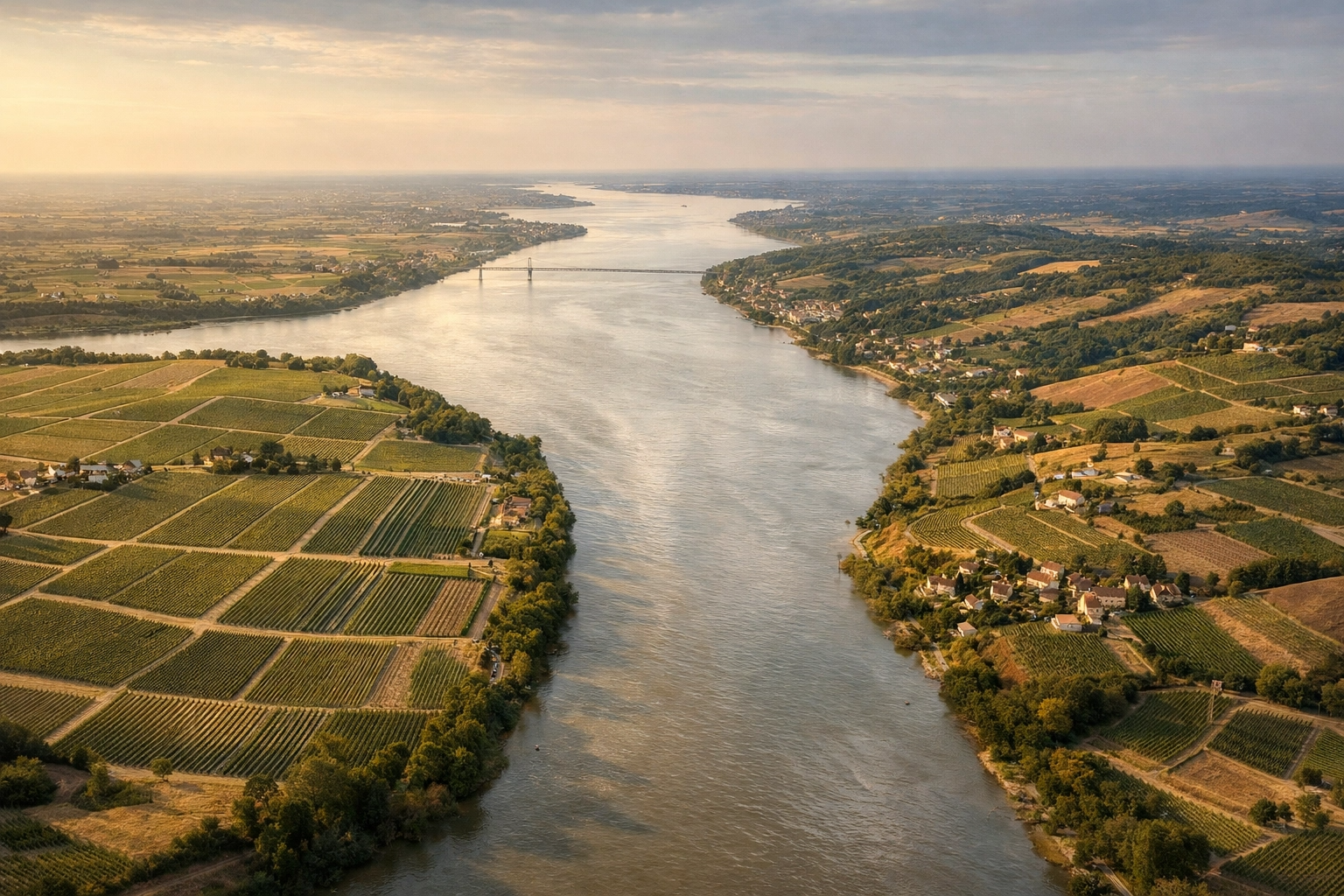
Here's where things get interesting. The grape varieties change dramatically from one bank to the other: and that's what gives each side its signature style.
Cabernet Sauvignon is the star on the Left Bank, typically making up 60-80% of most blends. Supporting grapes include:
Wine Style: Bold, structured, tannic. Think black currant, cedar, graphite, and tobacco. These wines need time: sometimes 10-20 years: to soften and reveal their complexity.
On the Right Bank, Merlot dominates, often making up 70-90% of the blend. You'll also find:
Wine Style: Richer, softer, more approachable young. Think plum, black cherry, chocolate, and velvety tannins. These wines are still age-worthy but drink beautifully earlier than Left Bank counterparts.
If you want to understand Bordeaux, you have to talk about dirt. The soil is the secret sauce that makes each bank unique.
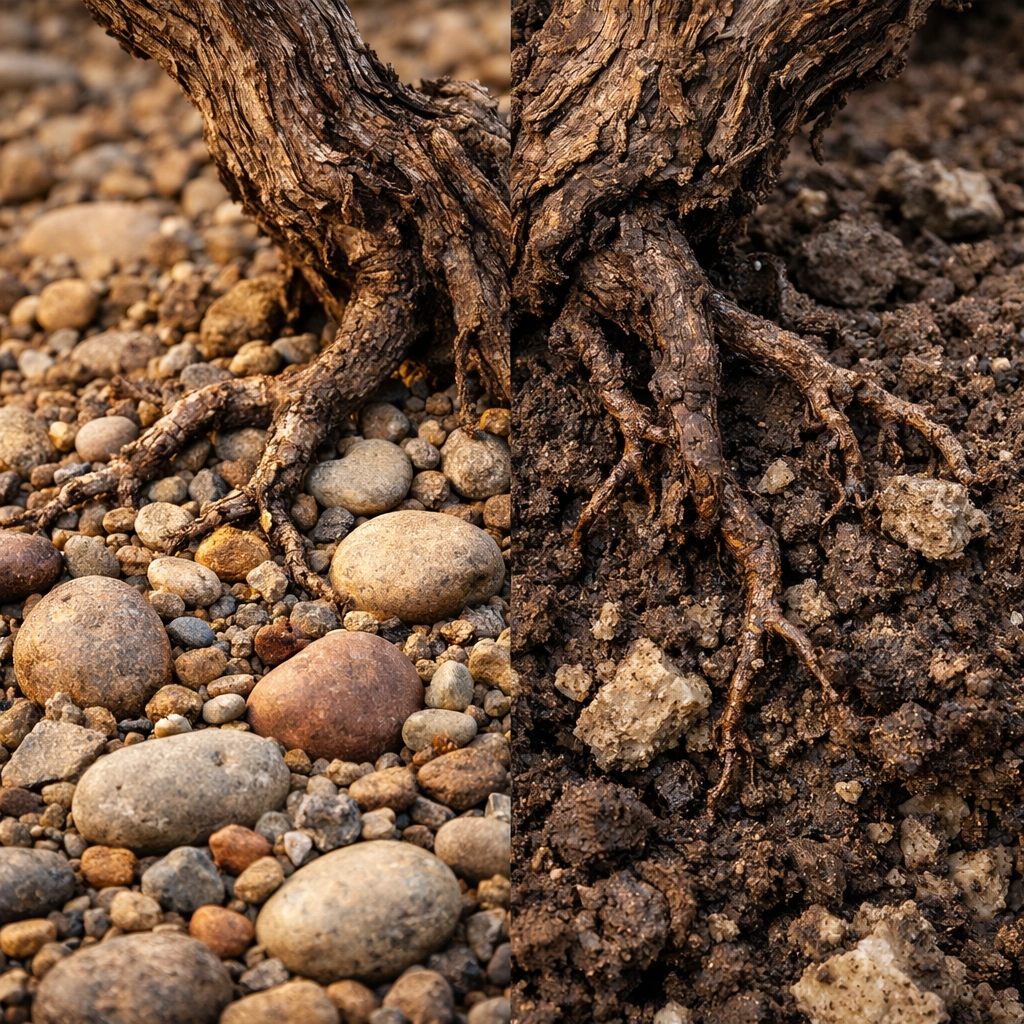
The Left Bank sits on glacial gravel deposits: stones, pebbles, sand, over limestone bedrock. This well-drained, nutrient-poor soil forces vines to struggle, digging deep for water and nutrients.
Why it matters: Struggle = concentrated, complex grapes. The gravel also retains heat from the sun and releases it at night, helping Cabernet Sauvignon ripen fully in Bordeaux's cool maritime climate.
The Right Bank is dominated by clay and limestone soils, which retain more moisture and stay cooler.
Why it matters: Clay is perfect for Merlot, which prefers slightly cooler, wetter conditions. The limestone adds minerality and structure to the wines. This terroir produces lush, fruit-forward wines with softer tannins.
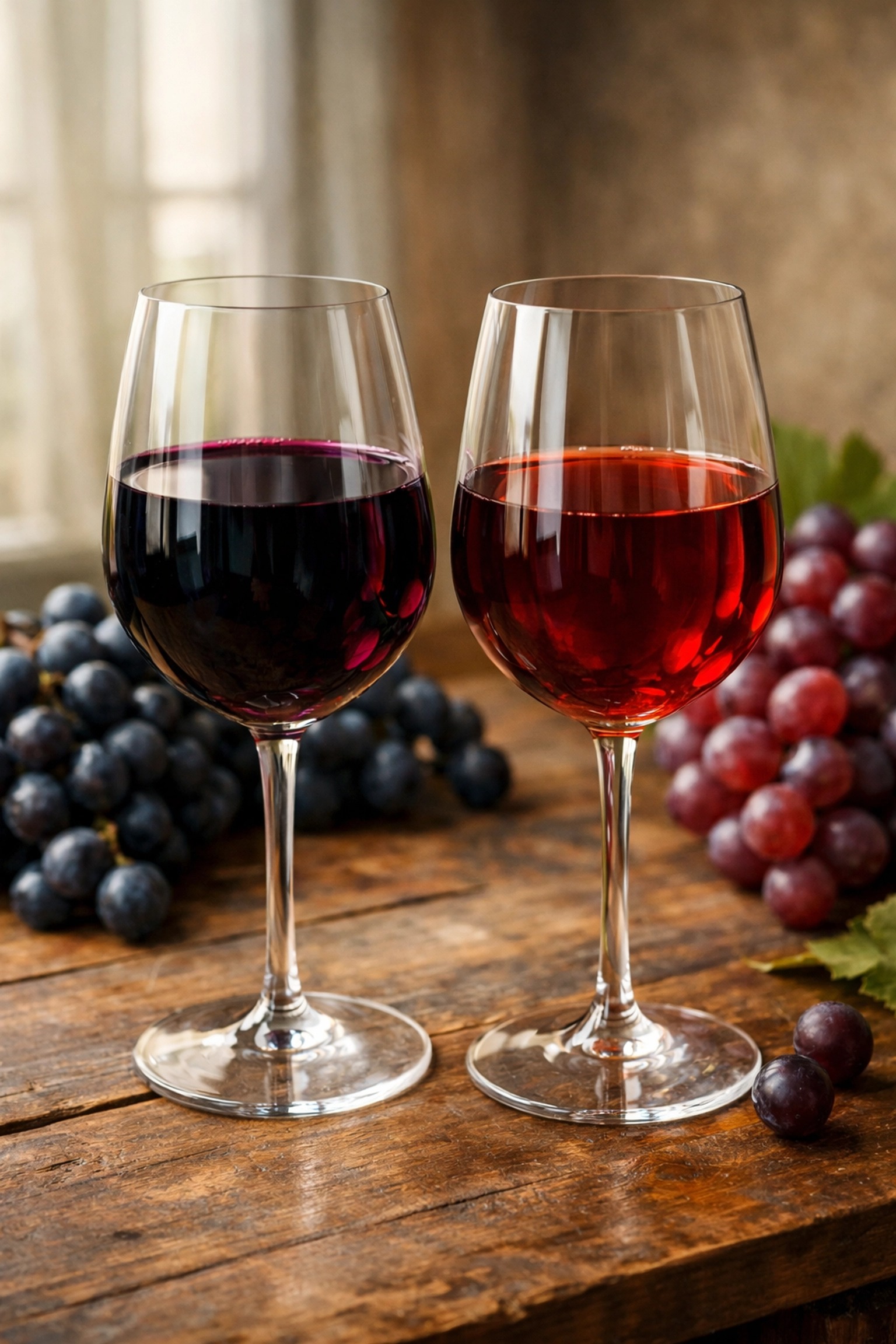
The 1855 Classification is Bordeaux's most famous: and most controversial: ranking system. Commissioned by Napoleon III for the Paris Exposition, it ranked Left Bank châteaux based on price and reputation at the time.
Important: This classification only applies to the Left Bank. The Right Bank has its own systems: Saint-Émilion Classification (updated every 10 years) and Pomerol has no official classification at all.
Yes and no. It's still a powerful marketing tool and a mark of prestige, but it hasn't been updated in nearly 150 years (except for Mouton Rothschild). Many unclassified estates now produce wines that rival or exceed some classified growths.
At Vinology Academy, our France course: taught by instructors like Robin Kelly O'Connor, former lead of the Bordeaux Wine Bureau: dives deep into these classifications and teaches you which producers are overperforming their rank. Learn more about our France course here.
If you manage a restaurant, wine shop, hotel, or private club, understanding Bordeaux isn't optional: it's essential. Your staff needs to confidently recommend wines from both banks, explain the differences, and upsell premium bottles.
Vinology Academy's Enterprise Bundle gives you unlimited staff training for just $995/year per location. That's every server, sommelier, and manager: trained on Bordeaux, France, Italy, Spain, and 10+ other regions.
ROI Reality Check: Sell two additional cases of mid-tier Bordeaux per year (think $30-50 bottles), and you've covered your entire training investment. Most locations see ROI within 60 days.
👉 Contact us to set up your team
Here's the honest answer: it depends on your palate and what you're pairing with.
Pro Tip: You don't have to choose. Most serious wine lovers appreciate both banks for different occasions and moods. Start with a Left Bank Pauillac and a Right Bank Saint-Émilion side-by-side to taste the difference yourself.
Q: Is Bordeaux always a blend?
A: Almost always. Bordeaux is famous for blending multiple grape varieties to create balance and complexity. Single-varietal Bordeaux is extremely rare.
Q: What does "château" mean in Bordeaux?
A: In Bordeaux, "château" refers to a wine estate or producer, not necessarily a physical castle. It's the brand name for wines from that property.
Q: Why is Bordeaux wine so expensive?
A: Prestige, limited production, aging potential, and global demand. First Growth Bordeaux can cost hundreds to thousands per bottle, but there are excellent Bordeaux wines at every price point ($20-50 bottles are fantastic).
Q: Can I visit Bordeaux wine regions?
A: Absolutely. Many châteaux offer tours and tastings, though some require advance booking. The Left Bank (especially Médoc) and Right Bank (Saint-Émilion) are both beautiful to explore.
Q: What's the difference between Bordeaux and Bordeaux Supérieur?
A: Bordeaux Supérieur has stricter regulations: lower yields, higher minimum alcohol, and longer aging requirements. It's often better quality for just a few dollars more.
Q: Does the Right Bank make white wine?
A: Yes, but it's much less common. Both banks produce white Bordeaux, primarily from Sauvignon Blanc and Sémillon. The Left Bank's Pessac-Léognan is especially known for age-worthy whites.
Q: Which bank makes sweet wine?
A: The Left Bank, specifically Sauternes and Barsac, produces the world's most famous sweet wines from botrytis-affected Sémillon and Sauvignon Blanc grapes.
Q: How long can Bordeaux wine age?
A: Top-tier Bordeaux from both banks can age 20-50+ years. Left Bank Cabernet-based wines typically need more time to soften than Right Bank Merlot-based wines.
Understanding Bordeaux is just the beginning. At Vinology Academy, we offer comprehensive courses on France, Italy, Spain, California, and beyond: designed for hospitality professionals, retailers, and serious wine enthusiasts.
Our France course, taught by experts like Robin Kelly O'Connor (former Bordeaux Wine Bureau lead), breaks down not just Bordeaux, but Burgundy, Champagne, Rhône, Loire, and Alsace with the same clarity and depth.
For Businesses: The Enterprise Bundle ($995/year per location) includes unlimited staff access to all 12+ courses. Train your entire team, boost wine sales, and improve guest experiences: all for less than the cost of sending one person to a two-day sommelier workshop.
👉 Get started with Enterprise training
Bordeaux doesn't have to be intimidating. Once you understand the Left Bank/Right Bank divide, the grapes, the soil, and the classifications, you can navigate any wine list with confidence: and help your customers or guests do the same.
Whether you're pouring a structured Pauillac or a silky Pomerol, you're serving centuries of winemaking tradition. That's worth celebrating (and learning about).
Last Updated: February 20, 2026
![[HERO] Tuscany Wine Regions Guide: Exploring Chianti, Montalcino, and Bolgheri](https://files.cdn.thinkific.com/file_uploads/993692/images/269/2ef/001/1771693810122.png)
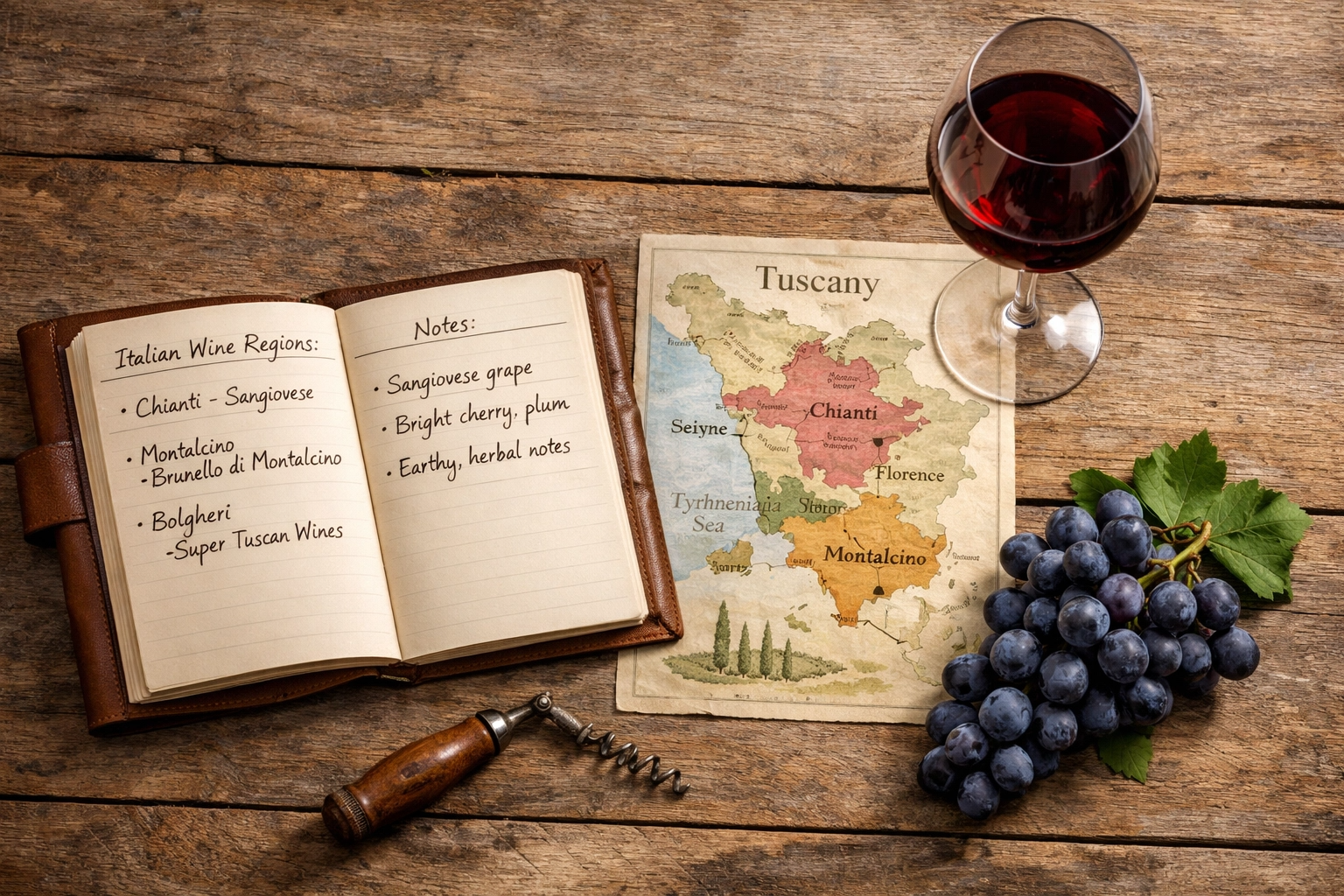
Tuscany is Italy's most iconic wine region, producing some of the world's most collectible and food-friendly wines. The region's three flagship areas: Chianti, Montalcino, and Bolgheri: represent different expressions of Italian winemaking philosophy.
For hospitality professionals, knowing these regions isn't just about wine trivia. It's about connecting guests with the right bottle, driving by-the-glass sales, and building credibility. When your staff can confidently explain the difference between a Chianti Classico and a Brunello di Montalcino, they're not just serving wine: they're creating experiences that justify premium pricing.
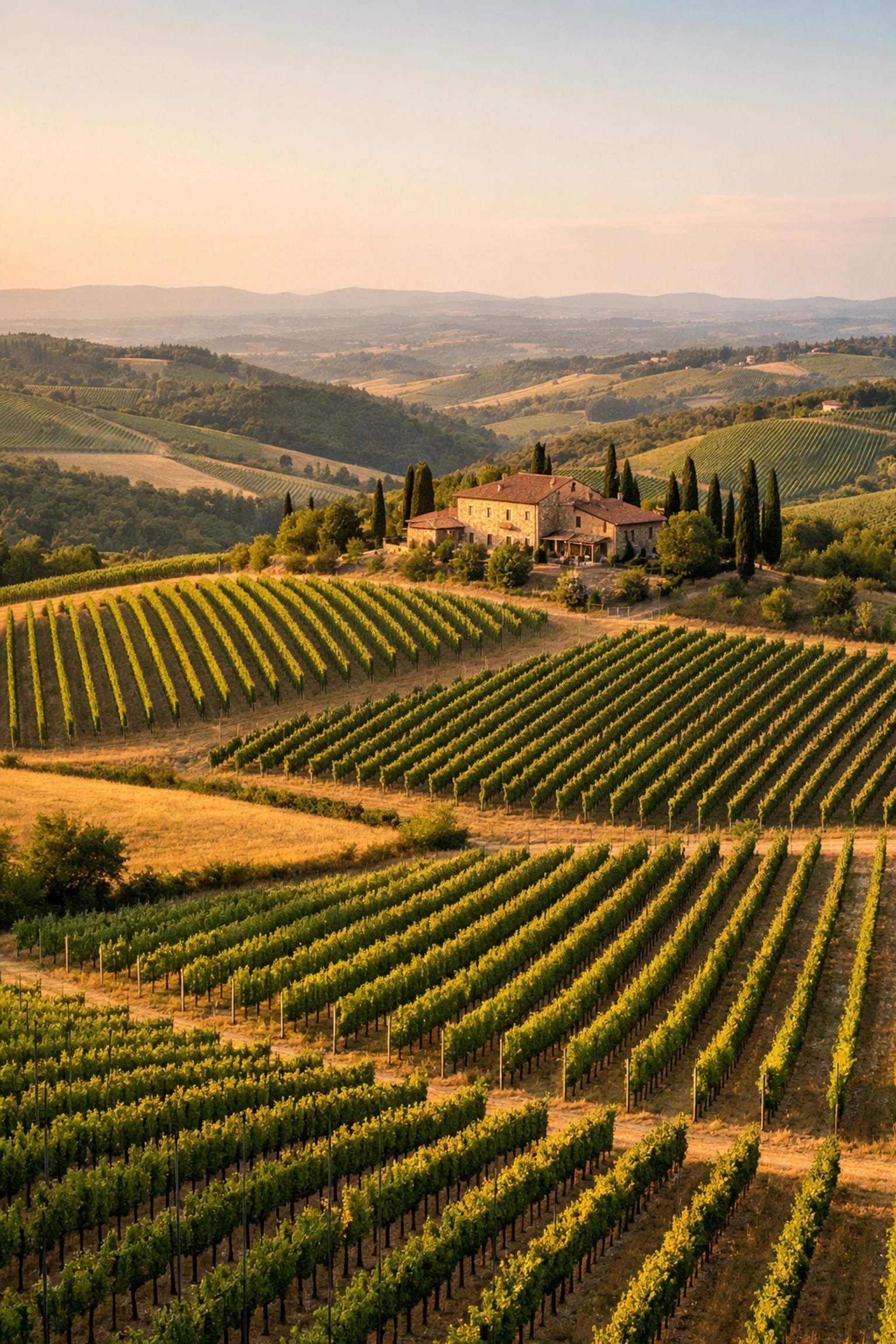
Chianti is the beating heart of Tuscan wine country. Stretching between Florence and Siena, this rolling landscape of vineyards and olive groves produces Italy's most recognizable red wine.
Key facts about Chianti:
The Chianti zone is actually divided into several subzones, but most consumers recognize two main categories: regular Chianti and Chianti Classico.
This is one of the most common questions restaurant staff face. Here's the straight answer:
Chianti Classico is not just "better Chianti": it's a completely separate DOCG designation with stricter production rules. The Classico zone sits in the historic heart of the region between Florence and Siena.
Key differences:
Pro tip for staff: When a guest asks for "a Chianti," clarify whether they want the everyday version or the premium Classico. The price difference is significant, but so is the quality jump.
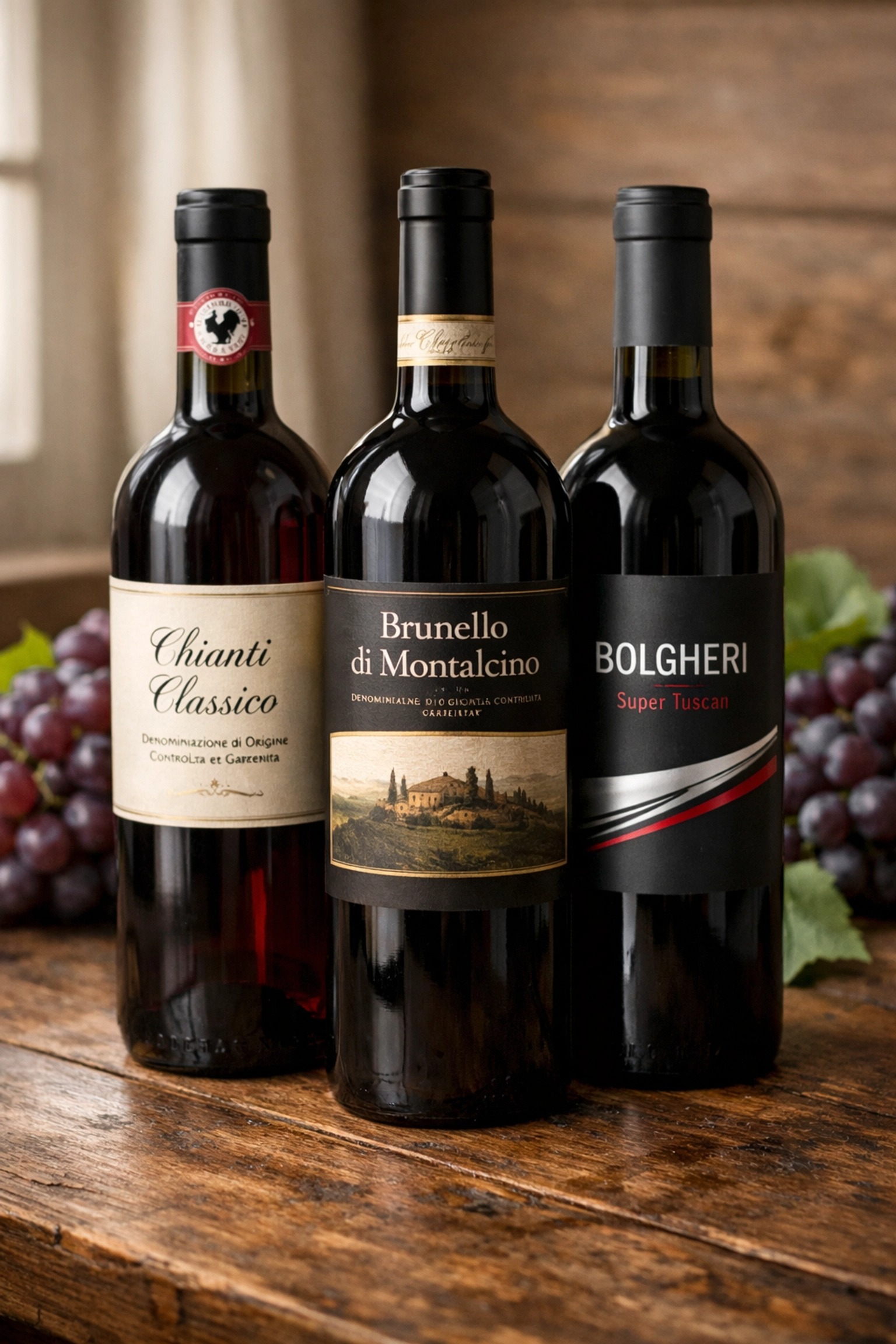
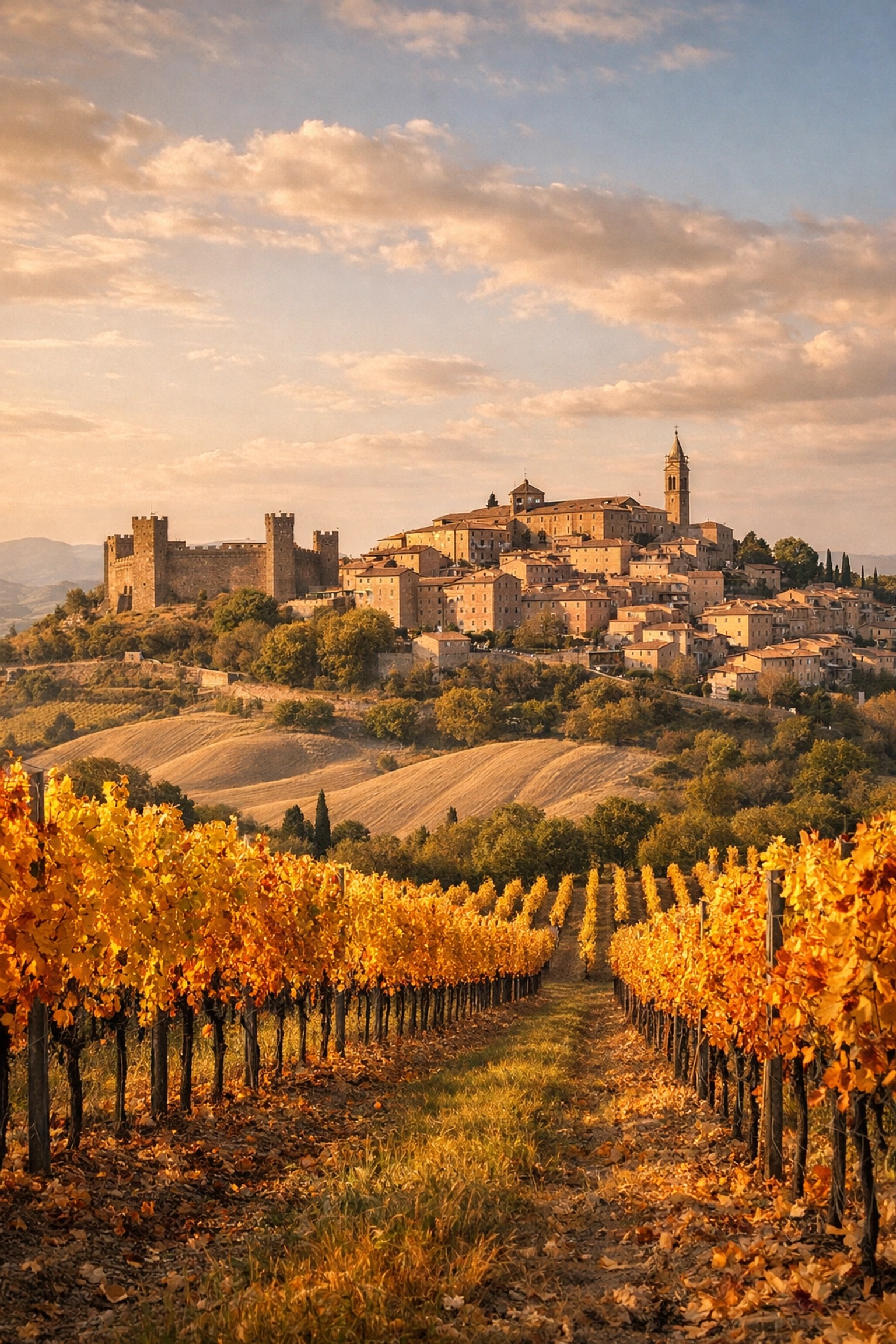
If Chianti is Tuscany's everyday hero, Brunello di Montalcino is its luxury icon. This wine comes from the hilltop town of Montalcino in southern Tuscany and represents one of Italy's most age-worthy and collectible wines.
What makes Brunello special:
The longer aging requirements mean Brunello commands higher prices: typically $50-$150+ per bottle retail. For restaurants, this creates an opportunity to position Brunello as a celebration wine or special occasion choice.
ROI consideration for wine programs: A single bottle of Brunello sold by the glass (4-5 pours at $25-35 each) can generate $100-175 in revenue from a $60 wholesale bottle. Training staff to confidently sell these higher-margin Italian wines pays for itself quickly.
In the 1970s, some Tuscan winemakers started breaking the rules. They wanted to blend Sangiovese with "international" grapes like Cabernet Sauvignon and Merlot, but Italian wine law wouldn't allow it under the traditional classifications.
So they created what became known as "Super Tuscans": technically lower-classified wines that sold for higher prices than many DOCG wines.
Bolgheri became the epicenter of this movement. Located on the Tuscan coast near the town of Castagneto Carducci, Bolgheri's climate and soils turned out to be perfect for Bordeaux-style blends.
Famous Bolgheri wines:
Today, Bolgheri has its own DOC and DOCG classifications, legitimizing what started as a rebellion. These wines compete directly with top Bordeaux and Napa Cabernets in price and prestige.
Understanding Italian wine classification helps your team navigate wine lists and make confident recommendations. Here's the hierarchy:
Italian Wine Classification (from lowest to highest):
All three regions we're discussing: Chianti Classico, Brunello di Montalcino, and Bolgheri: hold DOCG status. This means:
Training insight: When staff understand DOCG isn't just a marketing term but represents government-backed quality standards, they can use it as a sales tool with guests who want assurance about wine quality.
For restaurants, wine shops, and hospitality groups, Italian wine knowledge directly impacts revenue. Here's why:
Italian wines represent 20-30% of most wine lists in upscale American restaurants, but many staff members can't confidently differentiate between regions, styles, or price points. This leads to:
The ROI of proper training: Vinology Academy's Italy course gives your entire team the knowledge to sell Italian wines confidently. Our Enterprise program ($995/year) allows unlimited staff at one location to access all our regional courses.
Quick math: If better Italian wine training helps your team sell just two additional bottles per week at a $20 markup, that's $2,080 in annual profit: more than double your training investment.
Get started with Enterprise training here.
Which Tuscan wine should I try first?
Start with a Chianti Classico from a recent vintage (2019-2021). It's approachable, food-friendly, and gives you a clear sense of what Sangiovese tastes like in its home territory.
Why is Brunello di Montalcino so expensive?
The combination of 100% Sangiovese, strict aging requirements (minimum 5 years), limited production area, and exceptional aging potential drives prices up. You're paying for time, quality, and rarity.
What's the difference between a Super Tuscan and a regular Chianti?
Super Tuscans typically include international grape varieties (Cabernet Sauvignon, Merlot) alongside or instead of Sangiovese. Regular Chianti must be primarily Sangiovese. Super Tuscans often age in French oak, while traditional Chianti uses larger Slavonian oak barrels.
Can Chianti age like Brunello?
Basic Chianti is meant to drink young (1-3 years). However, Chianti Classico Riserva from top producers can age beautifully for 10-15 years, though typically not as long as Brunello's 20-30 year potential.
What foods pair best with these Tuscan wines?
How do I know if a Tuscan wine is authentic?
Look for the DOCG seal on the bottle neck and check for the region-specific symbols like Chianti Classico's Black Rooster. Buy from reputable retailers or directly from your distributor.
Understanding Tuscany is just the beginning. Vinology Academy's comprehensive Italy course covers all major Italian regions, from Piedmont's Barolo to Sicily's Etna.
For hospitality groups and wine retailers: Our Enterprise program provides unlimited training for your entire team at one location for $995/year. That's less than the profit from selling two extra cases of wine annually.
What's included:
Stop leaving money on the table because your staff lacks confidence with Italian wines. Contact us about Enterprise training and turn your team into Italian wine experts.
Last Updated: February 27, 2026
![[HERO] Wine 101 Course: 5 Steps How to Master Wine Basics Fast (Easy Guide for Beginners)](https://files.cdn.thinkific.com/file_uploads/993692/images/b11/351/80d/1771795439616.png)
Learning wine doesn't have to feel overwhelming. Whether you're a complete beginner, a restaurant server wanting to upsell with confidence, or a retailer building your team's knowledge, mastering wine basics comes down to following a proven system: not memorizing thousands of obscure facts.
The good news? You can develop real wine competency in weeks, not years, by focusing on the right fundamentals first.
The professional wine tasting method breaks down into five repeatable steps. This isn't just for sommeliers: it's the exact process beginners should use every single time they taste wine. Repetition builds muscle memory, and within a few tastings, this becomes second nature.
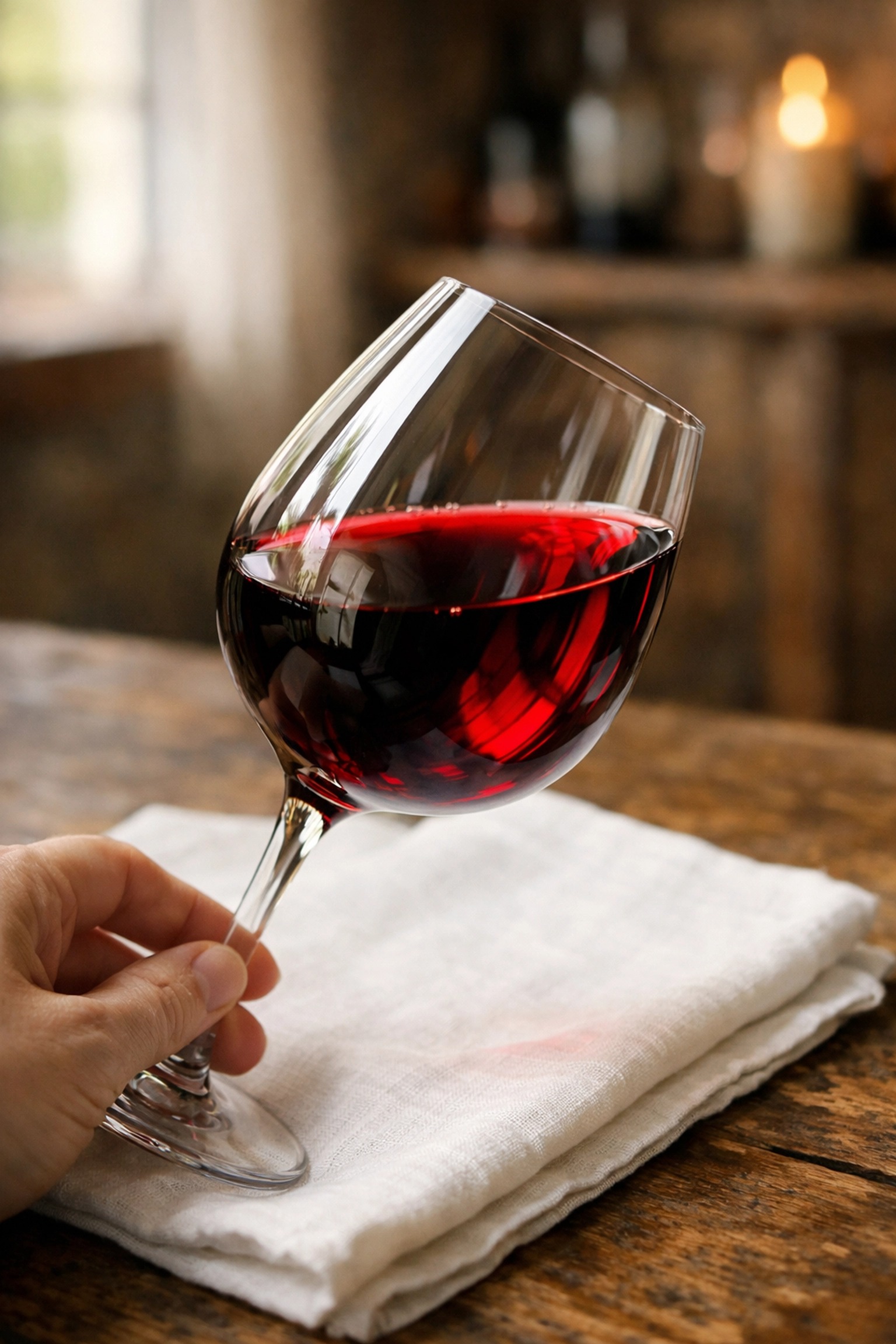
Hold your glass at a 45-degree angle against a white background (a napkin or piece of paper works perfectly). Look at the wine's color, clarity, and intensity.
What to notice:
This visual step takes 10 seconds and immediately starts training your brain to connect what you see with what you'll taste.
Swirl the wine gently in your glass for 5-6 seconds. This isn't pretentious: it's chemistry. Swirling aerates the wine, allowing alcohol vapors to dissipate so subtler aromas can emerge.
Pro tip: If you're nervous about spilling, practice swirling with the glass on a table first. Make small circular motions until you feel comfortable.
Stick your nose deep into the glass and take a solid breath. About 80% of what we perceive as "taste" actually comes from smell, so don't skip this step.
What to identify:
There are no wrong answers here. If you smell green apple in a Chardonnay, that's valid: even if someone else detects pear. Your palate is unique, and recognizing aromas builds confidence.
Take a small sip and let it coat your entire mouth: tongue, cheeks, roof. Don't just swallow immediately.
Key elements to assess:
After you swallow (or spit if you're tasting many wines), pay attention to the aftertaste. How long do flavors linger? What sensations remain?
A long, complex finish typically signals higher quality. A short finish doesn't mean the wine is bad: it might just be a lighter, drink-now style. But noticing finish length helps you understand structure and aging potential.
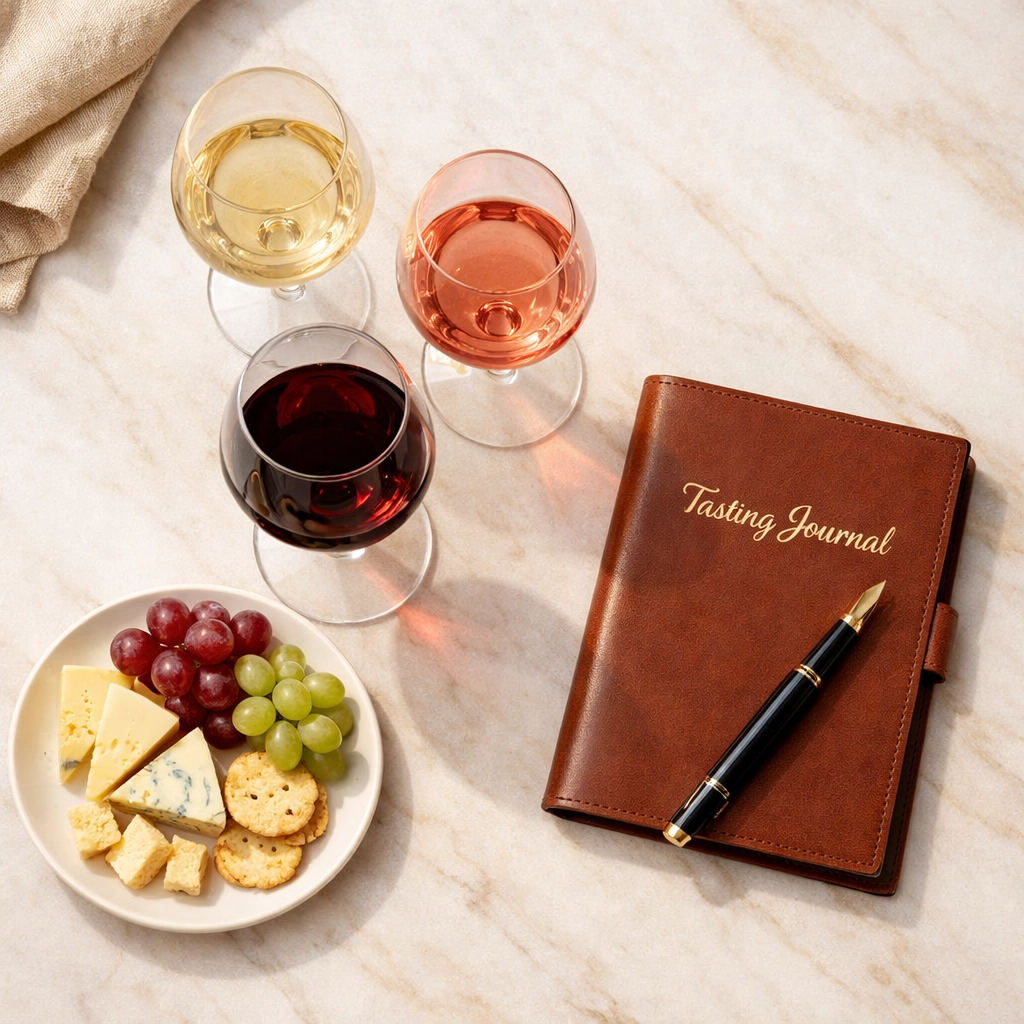
Self-teaching wine through random YouTube videos and Google searches takes forever. Trust me: I've seen people spin their wheels for years without building real foundational knowledge.
A structured Wine 101 course solves three critical problems:
At Vinology Academy, our Wine 101 course was designed with legendary educator Kevin Zraly's principles in mind: start simple, build systematically, and practice with purpose. You'll cover major grape varieties, wine regions, tasting technique, and food pairing fundamentals in a logical sequence.
For hospitality professionals (servers, bartenders, retail staff), the ROI is even clearer. Confident, knowledgeable staff sell more wine, create better guest experiences, and earn higher tips. Which brings us to...
If you manage a restaurant, wine shop, hotel, or private club, systematic wine training isn't a luxury: it's a revenue driver.
The Enterprise advantage: For $995/year per location, you can onboard and train unlimited staff through Vinology Academy's complete curriculum. That includes Wine 101, region-specific courses (France, Italy, California, etc.), and advanced modules on viticulture and wine service.
The math is simple: If your trained staff upsells just two additional cases of wine per year (that's less than one extra bottle per week), you've recouped the entire training investment. Most locations see returns within 60-90 days.
Beyond direct sales, trained teams:
Ready to discuss Enterprise training for your team? Contact us here to learn how we customize onboarding for restaurants, retailers, and hospitality groups.
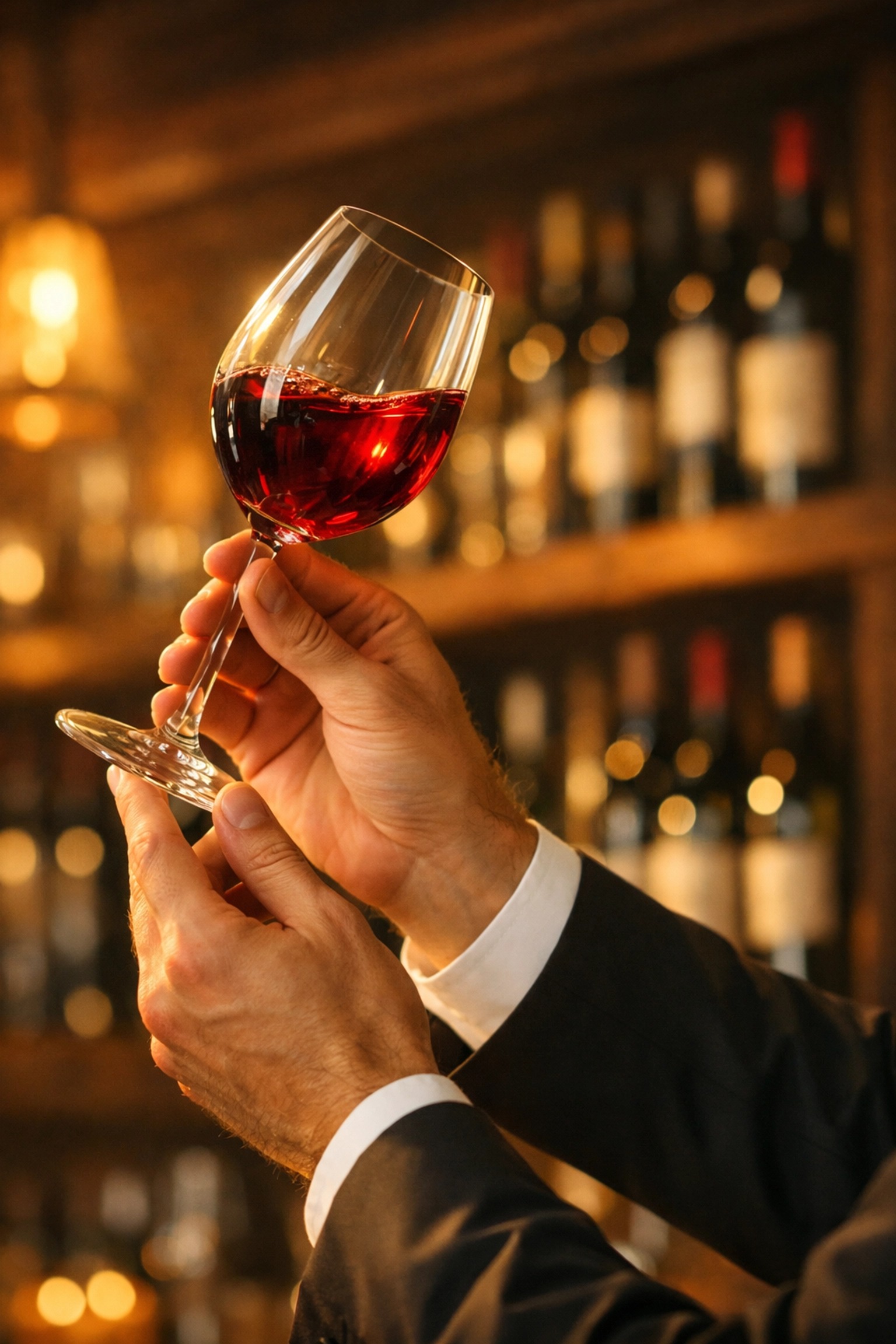
Not all wines are created equal for beginners. Some styles are forgiving, approachable, and help you build confidence. Others are complex, challenging, and better saved for when you have more experience.
Start here:
Wines to save for later: Big, tannic reds like Barolo or Brunello, highly acidic whites like Assyrtiko, and oxidative styles like Sherry. They're incredible, but they require context to appreciate.
Here's the honest answer: With focused practice, 4-8 weeks.
That doesn't mean you'll know every wine region on Earth or pass the Master Sommelier exam. It means you'll confidently:
The key is consistency. Tasting 2-3 wines twice a week with intention beats sporadic wine binge sessions. Take notes (even just a few words per wine), revisit grape varieties, and apply what you learn in real situations: ordering at restaurants, shopping for dinner parties, or guiding customers.
For hospitality professionals moving through a structured program like Vinology Academy's full course bundle, most staff reach Wine 101 competency within their first month and regional expertise within 90 days.
Every bottle your staff sells with confidence is a bottle that wouldn't have sold itself. Whether you're a single-location wine bar or a multi-unit restaurant group, $995/year per location for unlimited staff training delivers measurable ROI.
We've worked with restaurants that increased wine sales by 15-30% within the first quarter of implementing systematic training. Retail shops that reduced returns by training staff to make better recommendations. Hotels that turned wine service into a competitive advantage.
Training unlimited staff for less than $3/day? That's about the cost of a single glass of house wine. Get in touch with our team to discuss Enterprise pricing and custom onboarding for your location.
Do I need to have a "good palate" to learn wine?
Nope. Everyone starts with different sensitivities, but your palate develops with practice. Some people naturally pick up subtle flavors faster, but consistent tasting training levels the playing field within weeks.
Should I spit or swallow when tasting wine?
If you're tasting multiple wines (4+), spitting is standard practice to avoid alcohol impairment and palate fatigue. For casual learning with 1-2 wines, swallowing is fine. Do what works for your situation.
What's the difference between a Wine 101 course and regional courses?
Wine 101 covers foundational concepts: grape varieties, tasting technique, wine structure, and basic food pairing. Regional courses (France, Italy, California, etc.) dive deeper into specific appellations, terroir, and local wine laws. Start with 101, then explore regions that interest you.
Can I really train unlimited staff for $995/year?
Yes. Our Enterprise plan at Vinology Academy allows unlimited user accounts per location. Onboard new hires, refresh veteran staff, and build a consistent knowledge base across your entire team for one flat annual fee.
How do I remember everything I taste?
Keep a simple tasting journal: physical or digital. Note the wine name, grape, region, and 2-3 descriptors (e.g., "Pinot Grigio, Italy, crisp citrus, light body"). Over time, patterns emerge and retention improves naturally.
Ready to stop guessing and start confidently navigating the wine world? Whether you're learning for personal enjoyment or building professional skills, the 5-step method gives you a repeatable framework that works for every single wine you'll ever taste.
Start your wine education journey at Vinology Academy and discover how fast beginners can build real expertise with the right structure.
Last Updated: March 16, 2026
If you’re looking for the short answer to what makes South American wine regions so special, it boils down to two words: Altitude and Attitude. From the towering peaks of the Andes to the cooling breezes of the Pacific and Atlantic Oceans, this continent offers a diverse map of terroirs that range from the highest vineyards on Earth to ancient, gnarled vines in the rain-swept south.
For wine enthusiasts, it’s a playground of discovery. For hospitality professionals, it’s the most underutilized section of the wine list that can drive serious profit margins. Whether you are pouring a flinty Chardonnay from the coast of Chile or a brooding Malbec from the high-altitude deserts of Argentina, understanding the South America wine regions map is essential for navigating one of the most exciting landscapes in the modern wine world.
Argentina is the fifth-largest wine producer in the world, and while Malbec is the undisputed king, the "kingdom" is far more diverse than many realize. The geography here is defined by the rain shadow of the Andes, creating a desert-like environment where irrigation from snowmelt is the lifeblood of the vine.
Mendoza isn't just a region; it’s a powerhouse. Accounting for roughly 80% of Argentina’s total production, it actually boasts more vineyard acreage than Bordeaux, Burgundy, and Napa Valley combined.
When looking at a map of wine regions in South America, Mendoza is divided into three crucial zones:
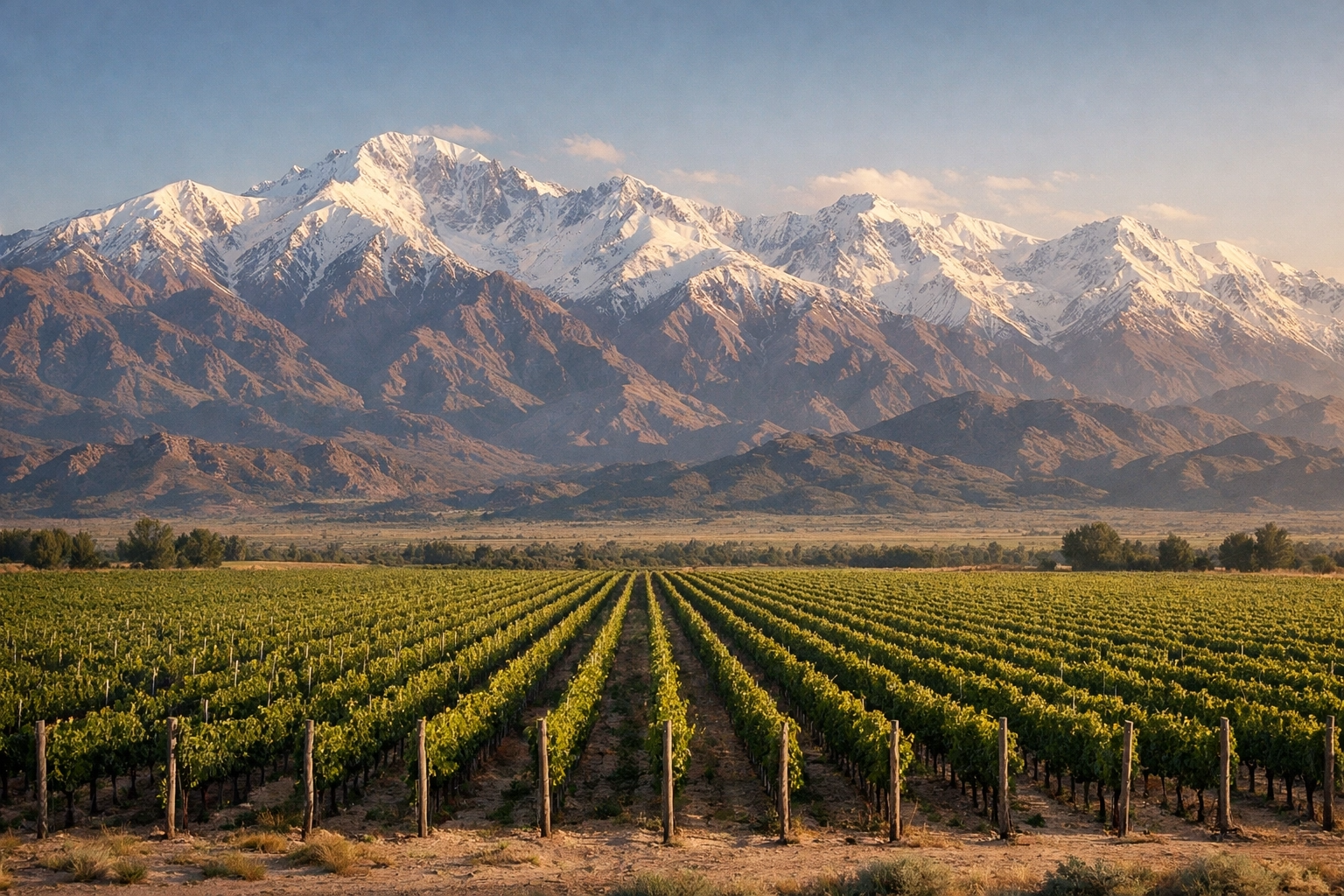
In provinces like Salta and Tucumán, you’ll find some of the highest commercial vineyards in the world, some reaching over 10,000 feet. This extreme altitude means intense UV radiation (thicker grape skins) and cool nights (retained acidity).
Further south, the landscape changes. Patagonia (Neuquén and Río Negro) is cooler, windier, and lower in altitude. This is the land of elegant Pinot Noir, crisp Chardonnay, and surprisingly refined Merlot. It’s the "thinking person’s" Argentine region, offering a restraint that contrasts with the power of the north.
Looking to turn your staff into high-performing wine experts without the headache of traditional certification schedules? The Vinology Academy Enterprise Bundle is designed for operators who want results. For just $995 per year, you can onboard your entire staff: unlimited seats: across all our professional-grade courses, including our deep-dive on South America.
The ROI is simple: You recoup the entire annual cost by selling just two additional cases of wine per year. Stop losing money on untrained staff and start building a culture of expertise.
👉 Get Started with Vinology Enterprise Here
If Argentina is defined by the mountains, Chile is defined by its isolation. Bordered by the Atacama Desert to the north, the Andes to the east, the Pacific to the west, and glaciers to the south, Chile is a viticultural island. It is also one of the few places on Earth where Phylloxera (the vine-killing louse) does not exist, meaning many vines are grown on their own original rootstocks.
Over 90% of Chilean wine comes from the Central Valley. This is where you’ll find the regions that put Chile on the global map:
Close to the Pacific, the Humboldt Current brings cold water and morning fogs. This is where Chile’s best white wines live.
Located at the edge of the desert, these regions use the proximity to the coast and high-altitude mountain sites to create Syrah and Chardonnay with incredible tension and minerality.
While Argentina and Chile dominate the South America wine regions map, your list isn't complete without a nod to the "Atlantic" side of the continent.
For a restaurant manager or sommelier, South American wine is the ultimate "value play." Because the land and labor costs are often lower than in Napa or Burgundy, the quality-to-price ratio (QPR) is astronomical.
When your staff can explain the difference between a high-altitude Malbec from the Uco Valley and a coastal Pinot Noir from Leyda, they aren't just selling a bottle: they are selling an experience. This expertise leads to higher check averages, better tips, and repeat customers who trust your team’s recommendations.
What is the most famous wine region in South America?
Mendoza, Argentina, is the most famous and largest wine region, known globally for its Malbec production.
Which region is known for Carmenère?
The Colchagua Valley in Chile’s Central Valley is widely considered the premier region for high-quality Carmenère.
Are South American wines only about Malbec and Cabernet?
Not at all. While those are the heavy hitters, regions like Salta (Argentina) are famous for Torrontés, and the Casablanca Valley (Chile) is a world-class producer of Sauvignon Blanc and Pinot Noir.
What is the "Atlantic" style of South American wine?
This refers primarily to wines from Uruguay and parts of Brazil and coastal Argentina. These wines tend to have higher acidity and lower alcohol compared to the "Continental" styles found near the Andes.
The world of wine moves fast. In 2026, customers are more educated and curious than ever. Can your staff keep up? For $995/year, the Vinology Academy Enterprise program gives your team the keys to the cellar. From Wine 101 to specialized modules on Spain, France, and South America, we provide the most accessible, high-impact training on the market.
Invest in your people, and the ROI will follow.
Unlimited staff. One flat fee. Absolute expertise.
Last Updated: April 26, 2026
![[HERO] Sauvignon Blanc vs. Pinot Grigio: The Ultimate Comparison for Beginners](https://files.cdn.thinkific.com/file_uploads/993692/images/0de/71c/94c/1777232554311.png)
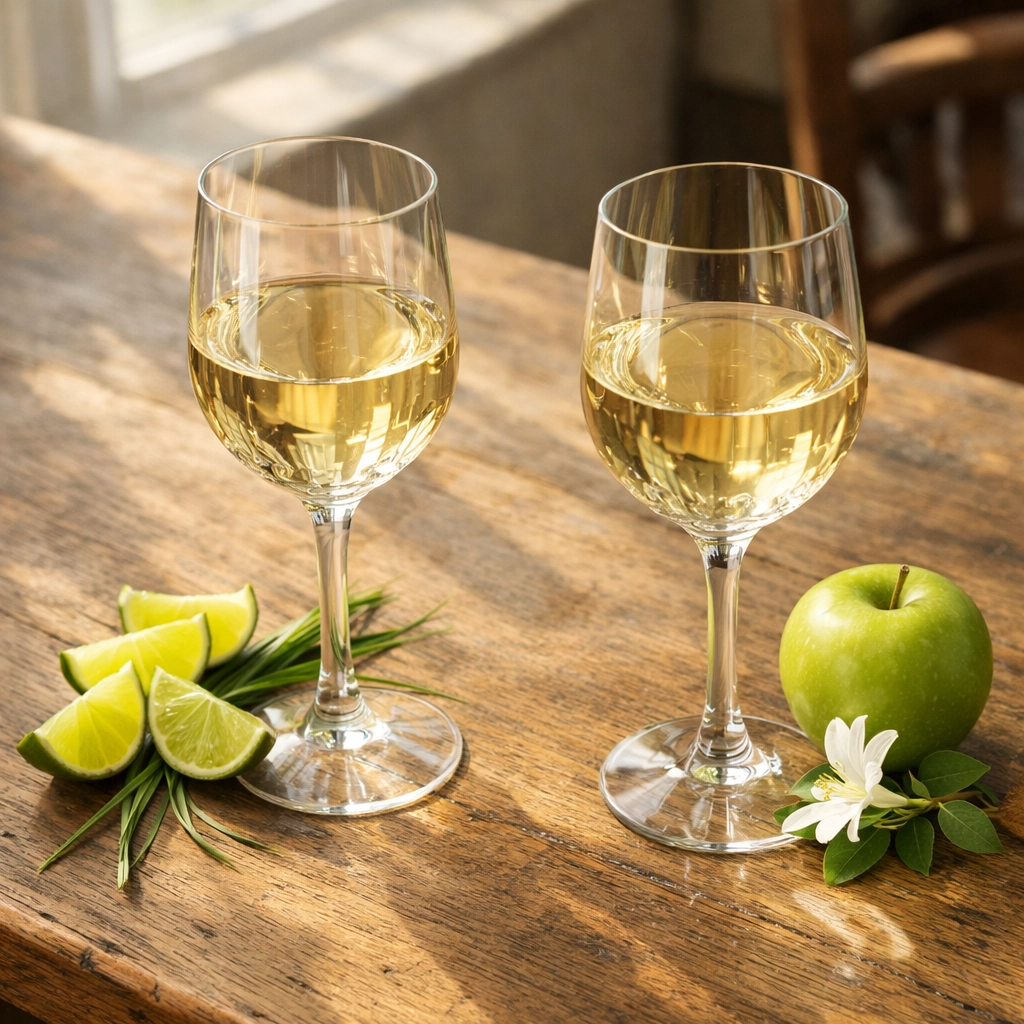
If you’ve ever stood in the wine aisle or stared at a restaurant menu feeling a bit overwhelmed, you aren't alone. Sauvignon Blanc and Pinot Grigio are the two heavyweights of the "crisp white wine" world. They look almost identical in the glass, and both are served ice-cold, but that’s where the similarities end.
As the Managing Director at Vinology Academy, I see students every day who think these two are interchangeable. They aren't. Choosing the wrong one can be the difference between a "perfect pairing" and a "palate clash." Let’s break down everything you need to know to order with confidence.
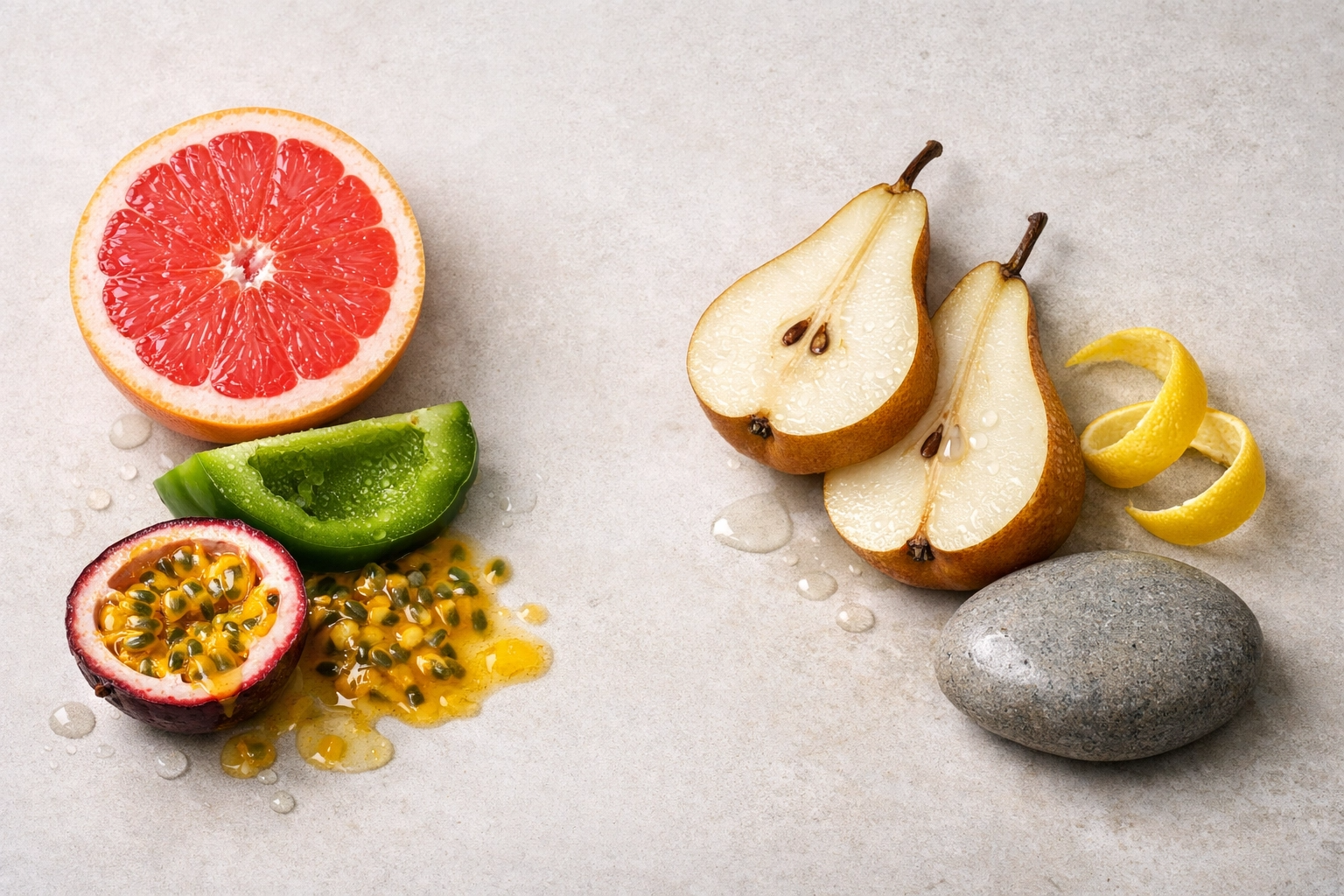
The primary difference lies in intensity. Sauvignon Blanc is an "aromatic" grape variety, meaning its scents and flavors are bold and immediately recognizable the moment you swirl the glass. It is famous for its high acidity and "green" notes (think freshly cut grass or bell pepper).
Pinot Grigio, on the other hand, is much more subtle. It is known as a "neutral" grape. It doesn't try to steal the spotlight; instead, it offers a clean, refreshing profile with delicate orchard fruit flavors. While Sauvignon Blanc demands your attention, Pinot Grigio is happy to play a supporting role to your meal.
Sauvignon Blanc is significantly more acidic.
In the wine world, acidity is that mouth-watering, "zingy" sensation you feel on the sides of your tongue. Sauvignon Blanc has some of the highest acidity levels of any white wine. This makes it incredibly refreshing but also quite sharp.
Pinot Grigio still has a refreshing crispness, but it is generally smoother and less "aggressive" on the palate. If you find that some wines give you heartburn or feel too tart, Pinot Grigio (specifically from Italy) is likely your better bet.
If you're looking to dive deeper into how acidity affects flavor, our Wine 101 course covers the structural elements of wine in a way that’s easy to digest.
Sauvignon Blanc contains organic compounds called pyrazines. These are responsible for the wine's signature herbaceous smells. Depending on where it is grown, you might taste:
Pinot Grigio is all about purity and freshness. It rarely sees oak aging, so you are tasting the fruit in its simplest form:
Are you a restaurant owner or hotel manager? Training your staff to distinguish between a Marlborough Sauvignon Blanc and an Italian Pinot Grigio isn't just about "wine knowledge": it’s about sales. A confident server who can describe these differences is far more likely to upsell a bottle than one who simply asks, "Red or white?"
At Vinology Academy, we offer an Enterprise Bundle for just $995/year. This allows you to onboard unlimited staff at a single location.
Contact our team today to get started.
Geography changes everything. A Sauvignon Blanc from the Pacific Northwest will taste vastly different from one grown in the Loire Valley.
Because these wines have different "personalities," they belong with different foods.
Choose Sauvignon Blanc for:
Choose Pinot Grigio for:
Yes and no. They are the exact same grape variety. However, "Pinot Grigio" usually refers to the light, crisp Italian style, while "Pinot Gris" usually refers to the richer, more floral French style (particularly from Alsace).
Generally, they are very similar, typically falling between 12% and 13.5% ABV. However, Sauvignon Blancs from warmer regions like South America or California can sometimes creep up to 14%.
Most beginners should drink these wines as fresh as possible. They are made to be enjoyed within 1–3 years of the vintage on the bottle. They lose their refreshing fruitiness and "zing" as they age.
Both are almost always made in a "dry" style, meaning there is no residual sugar. However, the intense tropical fruit aromas of a New Zealand Sauvignon Blanc can sometimes trick your brain into thinking the wine is sweet.
If you want a wine that wakes up your taste buds and smells like a summer garden, go for Sauvignon Blanc. It’s bold, it’s zesty, and it’s impossible to ignore.
If you want something versatile that you can sip on the porch or pair with a light lunch without overthinking it, Pinot Grigio is your best friend.
Ultimately, the best way to learn is to taste. Pick up a bottle of each: perhaps a Sancerre from our France course list and an Alto Adige Pinot Grigio: and taste them side-by-side. Your palate will thank you.
Wine education shouldn't be a luxury reserved for sommeliers. For hospitality operators, it is a fundamental business tool.
Vinology Academy Enterprise Training:
Click here to contact us and transform your wine program today.